การพัฒนาระบบเฝ้าระวังประสิทธิภาพและความปลอดภัยพื้นฐานของระบบให้บริการสารสนเทศ
DOI:
https://doi.org/10.65205/jcct.2026.e3760คำสำคัญ:
โพรมีธีอุส, ซีจีแนต, เทลสเกล, พูลโมเดล, พุชโมเดลบทคัดย่อ
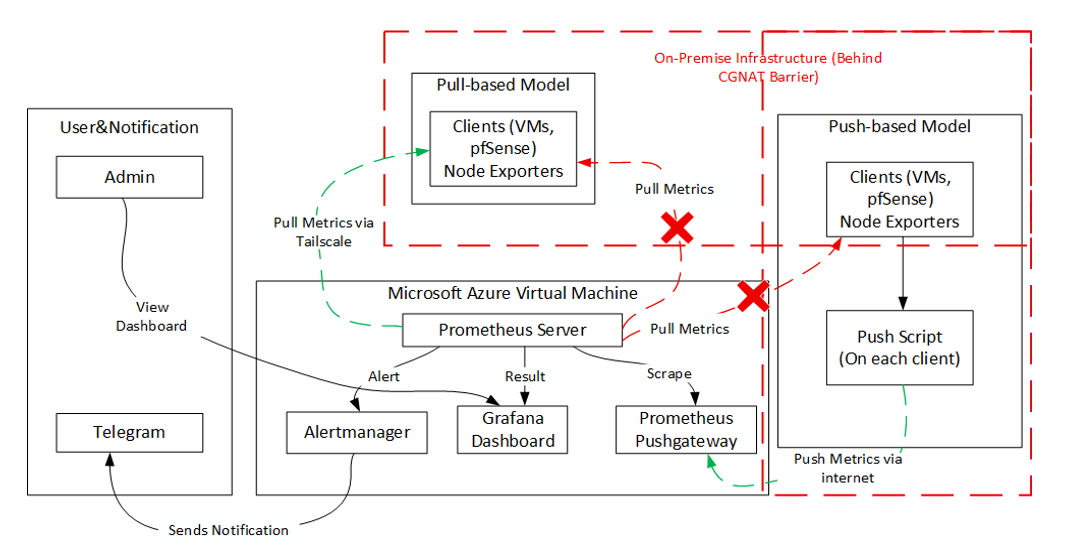
งานวิจัยนี้ศึกษาวิธีการพัฒนาระบบเฝ้าระวังและติดตามประสิทธิภาพสำหรับระบบ สารสนเทศที่ทำงานอยู่ภายใต้สภาพแวดล้อมเครือข่ายแบบ Carrier-Grade NAT (CGNAT) ซึ่งเป็นข้อจำกัดสำคัญที่ทำให้ Server ส่วนกลางไม่สามารถเข้าถึงโหนดปลายทางได้โดยตรง งานวิจัยนี้จึงได้ทำการเปรียบเทียบเชิงลึกระหว่าง สถาปัตยกรรม 2 รูปแบบคือ 1. รูปแบบ Pull Model ที่ทำงานผ่านเครือข่ายส่วนตัวเสมือนด้วยเทคโนโลยีของ Tailscale และ 2. รูปแบบ Push Model แบบดั้งเดิมที่ส่งข้อมูลผ่าน Pushgateway โดยทำการทดสอบ บนระบบจริงที่ติดตั้งบน Azure และจำลองเครือข่ายด้วย pfSense ผลการศึกษาพบข้อแลกเปลี่ยนที่สำคัญ คือ สถาปัตยกรรมแบบ Pull Model ผ่าน Tailscale มีความโดดเด่นด้านความเร็วในการแจ้งเตือนความต่อเนื่องของข้อมูลหรือความ Real-Time และความปลอดภัยที่สูงกว่าเนื่องจากไม่ต้องเปิดพอร์ตสาธารณะ ในขณะที่สถาปัตยกรรมแบบ Push Model มีจุดเด่นด้านการใช้ทรัพยากรระบบบนโหนดปลายทางที่ต่ำกว่าและมีความเป็นอิสระในการตั้งค่าระบบมากกว่า ข้อค้นพบนี้สามารถใช้เป็นแนวทางในการ เลือกสถาปัตยกรรมให้เหมาะสมกับลักษณะงาน เช่น การใช้ Pull Model สำหรับระบบที่เน้นความมั่นคงความปลอดภัยสูง แต่ขาดผู้เชี่ยวชาญในการตั้งค่าความปลอดภัย การเลือกสถาปัตยกรรมแบบ Pull Model จึงเป็นทางเลือกที่ดีเพราะ Tailscale มีพื้นฐานความปลอดภัยแบบ Zero Trust Network Access (ZTNA) เป็นพื้นฐานอยู่แล้วเพียงแค่เข้าสู่ระบบ ด้วยบัญชีผู้ใช้เดียวกันก็สามารถใช้งานได้โดยไม่ต้องตั้งค่าซับซ้อน ส่วนสถาปัตยกรรมแบบ Push Model เหมาะสำหรับอุปกรณ์ที่มีทรัพยากรจำกัด เช่น IoT และจำเป็นต้องมีผู้เชี่ยวชาญในการตั้งค่าระบบเพื่อความปลอดภัย
Downloads
เอกสารอ้างอิง
Cloudflare. (n.d.). Zero Trust Security | What is a Zero Trust Network? https://www.cloudflare.com/learning/security/glossary/what-is-zero-trust
Hellstern, T. (2022). CERNBox Monitoring with Pushgateways [CERN Summer Student Program Report].
Hriţcan, D.-F., & Balan, D. (2024a, September 19-20). Exposing IoT Platforms Securely and Anonymously Behind CGNAT. 2024 23rd RoEduNet Conference: Networking in Education and Research, 1–4. Institute of Electrical and Electronics Engineers. https://doi.org/10.1109/RoEduNet64292.2024.10722287
Hriţcan, D.-F., & Balan, D. (2024b, May 23-25). Using Tailscale and PfSense for Security and Anonymity of IoT Environments. 2024 International Conference on Development and Application Systems, 91–94. Institute of Electrical and Electronics Engineers. https://doi.org/10.1109/DAS61944.2024.10541192
Hriţcan, D.-F., Graur, A., Bălan, D.-G., & Timofte, E.-M. (2025). A Performance Analysis of VPN Technologies Used in an IoT Environment. Advances in Electrical and Computer Engineering, 25(2), 81–88. https://doi.org/10.4316/AECE.2025.02009
National Cyber Security Agency. (2025). Monthly Threat Patterns [Files]. NCSA Drive. https://drive.ncsa.or.th/s/bNymMs4BbNjE8x4?dir=/&editing=false&openfile=true (In Thai)
netElastic. (n.d.). Conserve IPv4 Addresses and Transition to IPv6. https://netelastic.com/cgnat-solutions
Prometheus. (n.d.a). Configuration. https://prometheus.io/docs/prometheus/latest/configuration/configuration
Prometheus. (n.d.b). Prometheus Architecture [Infographic]. https://prometheus.io/docs/introduction/overview
Saputra, M. Y. E., Noprianto, Arief, S. N., Wijayaningrum, V. N., & Syaifudin, Y. W. (2024, January 28-29). Real-Time Server Monitoring and Notification System with Prometheus, Grafana, and Telegram Integration. 2024 ASU International Conference in Emerging Technologies for Sustainability and Intelligent Systems, 1808–1813). Institute of Electrical and Electronics Engineers. https://doi.org/10.1109/ICETSIS61505.2024.10459488
Sirviö, J. (2021). Monitoring of a Cloud-Based IT Infrastructure. [Master’s thesis, University of Turku]. UTUPub. https://urn.fi/URN:NBN:fi-fe2021052030903
ดาวน์โหลด
เผยแพร่แล้ว
รูปแบบการอ้างอิง
ฉบับ
ประเภทบทความ
หมวดหมู่
สัญญาอนุญาต
ลิขสิทธิ์ (c) 2026 วารสารคอมพิวเตอร์และเทคโนโลยีสร้างสรรค์

อนุญาตภายใต้เงื่อนไข Creative Commons Attribution-NonCommercial-NoDerivatives 4.0 International License.