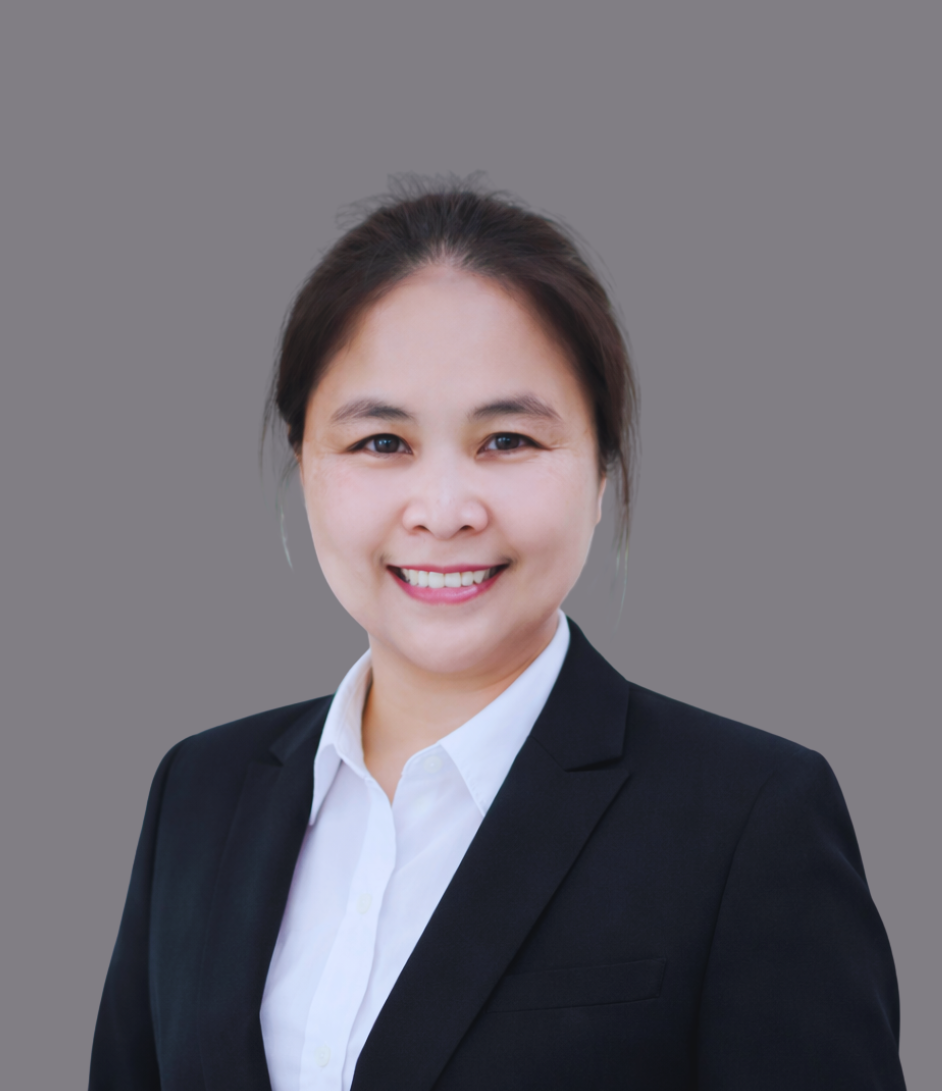
Editor-in-Chief: Dr.Wijittra Potisarn
Editorial Board: Click
Journal English Title: Journal of Computer and Creative Technology
Journal Thai Title: วารสารคอมพิวเตอร์และเทคโนโลยีสร้างสรรค์
ISSN 2985-1580 (Print)
ISSN 2985-1599 (Online)
Journal Abbreviation: J. Comput. Creat. Technol.
Initial: JCCT
DOI (Crossref):
10.65205/jcct.YYYY.eX (New)
DOI (DataCite/NRCT):
10.14456/jcct.xxxx.x (Old)
APC:
- 3,500 THB per Thai article
- 4,500 THB per English article
Type of Article: Academic and Research
Language: Thai and English
Accessibility: Open Access
Publication: 3 issues per year
- No. 1: January - April
- No. 2: May - August
- No. 3: September - December
Quality Assesment: At least two-peer reviewers with Double Blind Review

Instructions for Authors
Introduction
Journal of Computer and Creative Technology. ISSN 2985-1580 (Print). ISSN 2985-1599 (Online). The journal is published by the Computer Studies Department, Faculty of Science and Technology, Surindra Rajabhat University, which accepts publication of academic works in 2 types: scholarly articles and research articles, in both Thai and English. The journal publishes 3 issues per year from 2023 onwards: Issue 1 from January to April, Issue 2 from May to August, and Issue 3 from September to December. The scope of the journal includes 1) Application of computers and technology for research, development, and creation, 2) Education and integration of computers and technology into lifelong learning, and 3) Interdisciplinary computers and technology for local and social development. The submitted articles will be initially reviewed by the editorial board regarding the journal's scope and writing style.
The articles that pass the preliminary review will then be sent for quality assessment by at least 2 peer reviewers with expertise in the relevant fields from various institutions, using the peer review format of unknown authors and unknown authors (Double-Blind Peer Review).
The editorial board reserves the right not to consider the evaluation of articles that have been published in other journals or publications or are under consideration for publication in other journals or publications. In addition, the journal asks that authors strictly write articles under Attribution-NonCommercial-NoDerivatives 4.0 International: CC BY-NC-ND 4.0, if using other authors' information, the source must be indicated, must not be modified, must not be used for commercial purposes, must ask for permission from the copyright owner, and must show the letter of permission to the editorial board before the article is published.
1. Preliminary Consideration
The preliminary consideration, the journal will consider the type of article, the scope of the journal, and the writing style of the article, which are detailed as follows:
1.1 Article Types.
The journal accepts the following types of academic work:
1. An academic article is an article with correct academic content, concepts, and clear presentation that is beneficial to academic work, consisting of an abstract in both Thai and English, an introduction, part 1 about the title to lay the foundation of knowledge and understanding for readers, part 2 about data analysis, reasoning, criticism, and critique, adding arguments to show readers the author's ideas, and consistent with the purpose of the article. It must include theory and evidence based on academic principles, part 3 about expressing opinions, problem-solving guidelines, or suggestions, conclusion, acknowledgment (if any), and references.
2. Research article that has research procedures that are correct according to research methodology is clear in solving problems, and the results have found new knowledge that shows academic progress, or can be put to use, consisting of abstracts in both Thai and English, introduction, research objectives, research framework, literature review, methods, the results, conclusions, and discussions, suggestions, acknowledgments (if any), references.
1.2 Journal Scopes.
The journal accepts articles in the following fields according to the journal's scopes:
1. Application of computers and technology for research, development, and creation, including computer science, information technology, digital technology, business computing, computer studies, multimedia technology, logic, mathematics, and others related to it, including technology, or innovation for problem-solving, or increasing efficiency for research, development, and creation.
2. Education and integration of computers and technology into lifelong learning, including learning ecosystem management, innovation, computers, and technology to enhance the promotion of lifelong learning.
3. Interdisciplinary computers and technology for local and social development, including interdisciplinary studies and integration of computer and technology knowledge, including skills required for career, local and social development, improving the quality of life for individuals, communities, societies, national and international.
1.3 Article Writing Format: The journal accepts only articles written according to the journal's specified format.
2. Article Writing Process.
2.1 Page Setup and Print Fonts.
The paper setting is A4, normal printing font uses TH SarabunPSK font size of 14 points, the same black color throughout the article, except for Thai and English titles font size of 16 points, or if necessary, use symbols, or special fonts from the computer can be done.
2.2 Paper Margins.
A setting the printing distance from the paper margin as follows:
1. From the top edge of the paper, 2.84 cm distance.
2. From the left edge of the paper, 2.84 cm distance.
3. From the right edge of the paper, 2.54 cm distance.
4. From the bottom edge of the paper, 2.54 cm distance.
5. Line spacing 1.0.
2.3 Paragraphing.
Leave 1st tab space from the left side, start at 1.00 cm, then increase the next tab by 0.50 cm, e.g., 1.50, 2.00, 2.50, 3.00, 3.50, etc.
2.4 Number of Article Pages.
Number of pages on 6 – 18 pages (Including tables, graphs, and images).
2.5 Academic Article Contents.
1. Title.
2. Author(s).
3. Address: Please type your affiliation and address with the country.
4. Email: Please type the email of the primary author, or article coordinator, after the text *Corresponding author: name (e-mail).
5. Abstract: If the article is in Thai, the abstract must be written in both English and Thai. The content in both languages must be consistent with each other and grammatically correct. The total word count must not exceed 700 words.
6. Keywords of 3 – 5 words.
7. Introduction: The introduction is written to persuade readers and stimulate interest in the topic. It may emphasize the significance of the subject, raise a currently relevant or emerging issue, or highlight the benefits readers will gain from reading the article. The introduction may also state the objectives of the writing and outline the scope of the article’s content, providing readers with an overall view of the article.
8. Body: It consists of three parts. Part 1 includes headings that establish the background of the topic to be discussed. Part 2 includes headings related to data analysis, reasoning, critical analysis, and discussion, including the development of arguments. This section must adhere to established principles and theories and be supported by academically appropriate references. Part 3 includes headings related to the presentation of opinions or recommendations. The content must be organized appropriately, logically sequenced, and clearly presented to ensure ease of understanding for readers. Images, tables, or charts may be used to enhance comprehension. The language used in writing must conform to academic standards.
9. Conclusion: The conclusion summarizes the key points of the article based on the presented sections, linking and integrating them at the end of the paper. It may highlight the significance of the content and discuss how it can be applied or used in practice. In addition, questions may be posed to encourage readers to further explore and seek additional knowledge.
10. Acknowledgement (If any): This section describes the funding that supported the work leading to the preparation of the academic article, specifying the name of the grant, the funding agency or sponsor, and the fiscal year in which the funding was received. If there is no funding support, this section need not be included.
11. Declaration of Generative AI: If AI tools were used, the tools employed, the prompts or commands used, and the specific sections or tasks supported by AI must be clearly stated. All disclosures must comply with the journal’s AI policy.
12. CRediT Author Statement: Authors are required to specify the roles and responsibilities of each contributor in the scholarly article using the standard framework known as CRediT (Contributor Roles Taxonomy) to ensure transparency regarding individual contributions. Examples of CRediT roles include Conceptualization, Methodology, Software, Validation, Formal Analysis, Investigation, Resources, Data Curation, Writing - Original Draft, Writing - Review & Editing, Visualization, Supervision, Project Administration, and Funding Acquisition.
13. References: Adhere to the APA 7th edition (American Psychological Association 7th edition).
2.6 Research Article Contents.
1. Title.
2. Author(s).
3. Address: Please type your affiliation and address with the country.
4. Email: Please type the email of the primary author, or article coordinator, after the text *Corresponding author: name (e-mail).
5. Abstract: If the article is in Thai, the abstract must be written in both English and Thai. The content in both languages must be consistent and grammatically correct. The total word count must not exceed 700 words.
6. Keywords of 3 – 5 words.
7. Introduction: This section describes the background and significance of the topic, as well as the rationale for conducting the study. It demonstrates that the problem or research topic is valuable and worthy of investigation. References to relevant prior studies are included to highlight the importance of the topic, research methods or problem-solving approaches, and the results or findings of prior research.
8. Research Objectives: This section states the purpose of the research, specifying what the study aims to investigate. The research objectives should be consistent with the research title. If there are more than one research objective, they should be presented as separate items and arranged in the sequence of the research process.
9. Literature Reviews: This section involves reviewing documents and studies related to the topic under investigation. The works cited should be up to date and published within the past 10 years, except for foundational theories or essential concepts within the disciplinary context, which may be cited even if they are older than 10 years. In addition, the literature review should synthesize information from the reviewed sources, leading to the integration of relevant theories and previous research. This synthesis serves as a framework for the study and supports the subsequent discussion of the research findings.
10. Conceptual Framework (If any): This section defines the conceptual framework by integrating relevant theories and related research, demonstrating the variables or the scope of the study.
11. Methodology: This section explains the research methodology, describing the procedures and methods used in the study in accordance with the principles of each academic discipline, within the scope of the journal, and in compliance with international standards.
12. The Results: The research results should be reported in a manner that is consistent with and fully addresses the research objectives. The findings should be clearly explained to ensure ease of understanding for readers and must adhere to academic standards. If images, tables, or charts are included, the results should be thoroughly explained beneath each.
13. Conclusion: This section presents a summary of the findings obtained from the research.
14. Discussion: This section discusses the findings by elaborating on the knowledge derived from the results to provide clearer insights. It presents logical reasoning and references relevant theories and previous studies to support a well-founded, credible, and academically rigorous discussion.
15. Recommendation: This section provides recommendations derived from the research results or findings. It may include suggestions for practical applications as well as recommendations for future research.
16. Acknowledgement (If any): This section describes the funding that supported the work leading to the preparation of the academic article, specifying the name of the grant, the funding agency or sponsor, and the fiscal year in which the funding was received. If there is no funding support, this section need not be included.
17. Declaration of Generative AI: If AI tools were used, the tools employed, the prompts or commands used, and the specific sections or tasks supported by AI must be clearly stated. All disclosures must comply with the journal’s AI policy.
18. CRediT Author Statement: Authors are required to specify the roles and responsibilities of each contributor in the scholarly article using the standard framework known as CRediT (Contributor Roles Taxonomy) to ensure transparency regarding individual contributions. Examples of CRediT roles include Conceptualization, Methodology, Software, Validation, Formal Analysis, Investigation, Resources, Data Curation, Writing - Original Draft, Writing - Review & Editing, Visualization, Supervision, Project Administration, and Funding Acquisition.
19. References: Adhere to the APA 7th edition (American Psychological Association 7th edition).
3. Citing and References Writing
More information
4. Adding tables and figure
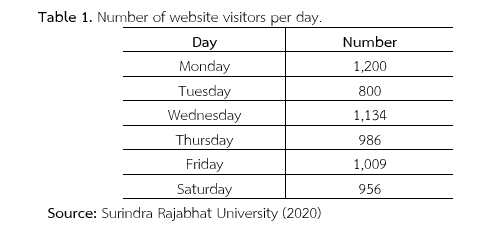
1. Tables must be in English, both the title and content. Use the word “Table.” followed by an Arabic numeral, such as Table 1., Table 2., etc., positioned above the table, aligned to the left margin, and one line above the table. If there is a “Source,” place it directly below the table without line spacing, using the word “Source:” aligned to the left edge of the table, followed by a colon (:) and then the citation, as in the example of Table 1.
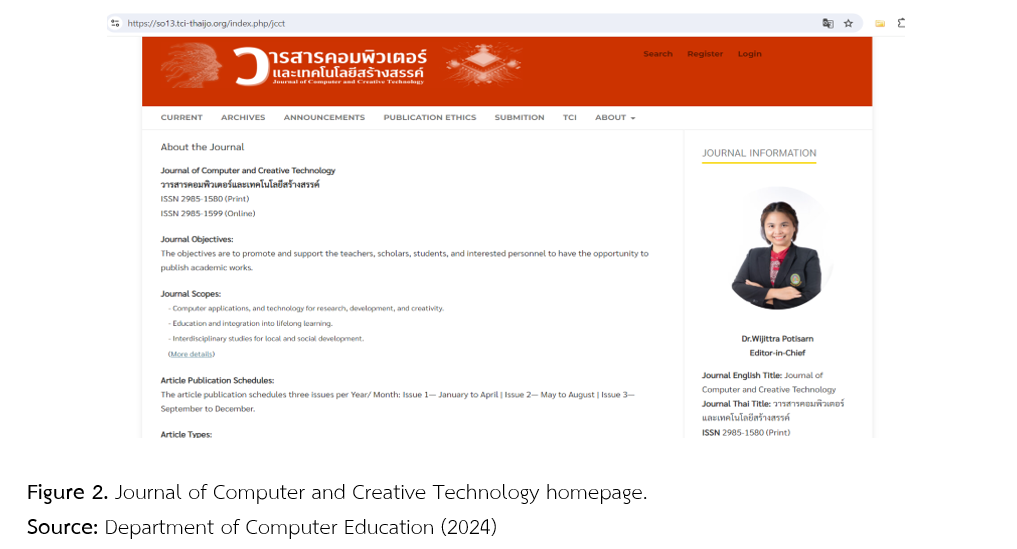
2. Figure must be in English for both the title and content. Use the word “Figure.” followed by an Arabic numeral, such as Figure 1., Figure 2., etc., positioned below the figure, with the caption on the left side and one line below the bottom of the figure. Place the figure centered on the page, with a width of no less than 13 cm, and ensure the image is clear. If there is a “source” place it directly below the table without line spacing, using the word “Source:” aligned to the left, followed by a colon (:) and then the citation, as shown in Figure 1.
5. Publication Ethics
Journal of Computer and Creative Technology (วารสารคอมพิวเตอร์และเทคโนโลยีสร้างสรรค์) The journal has established publishing ethics in line with the ethical standards of the Committee on Publication Ethics (COPE) and the announcement of the Thai-Journal Citation Index Center, regarding the evaluation of the ethics and principal ethics in Thai academic journals. The announcement was published on July 14th, 2023. Moreover, the updates regarding the evaluation of the ethics and principal ethics in Thai academic journals will be announced on February 17th, 2025. Thus, the publishing ethics of this journal include the ethics of the editors, the ethics of the reviewer, and the ethics of the author. (More information)
6. AI Policies for Journal of Computer and Creative Technology
According to the advancement of computers and modern technology, continuous development has occurred without limit. However, in line with the journal's objectives, which are to promote and support teachers, scholars, students, and interested personnel in publishing their academic works, the journal must serve as a platform for the dissemination of high-quality scholarly output. Therefore, the journal hereby announces its artificial intelligence policy for use in publication (More information)
7. How to submission the manuscript.
The manuscript for the publishing and review process can be submitted through the ThaiJo management system at the website https://so13.tci-thaijo.org/index.php/jcct. If you have any questions or need assistance with any matters, you can contact us via email at jcct@srru.ac.th.
Submission
8. Article Processing Charges
The Journal of Computer and Creative Technology announce the publication fees and the instructions for the article processing charges (APCs) steps for the publication fee (More information)
(Updated January 8, 2026)