การพัฒนาระบบศูนย์กลางเพื่อแลกเปลี่ยนการเคลื่อนไหวของจุดเรขาคณิตในโมเดลสามมิติ สำหรับงานด้านวิชวลเอฟเฟ็กต์และคอมพิวเตอร์แอนิเมชัน
DOI:
https://doi.org/10.65205/jcct.2026.e3713คำสำคัญ:
ระบบศูนย์กลาง, จุดเรขาคณิต, โมเดล 3 มิติ, วิชวลเอฟเฟ็กต์, คอมพิวเตอร์แอนิเมชันบทคัดย่อ
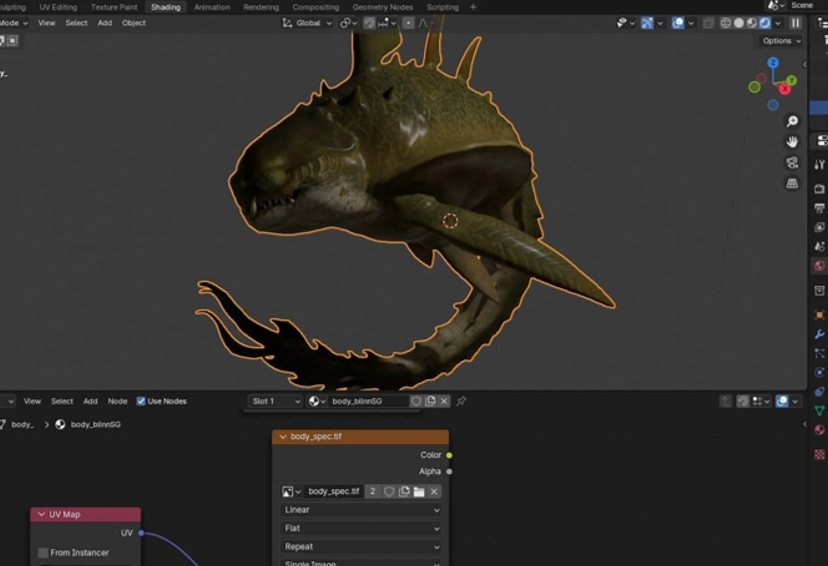
บทความนี้มีได้ศึกษาเทคนิคการลดขนาดไฟล์และลดเวลาในการประมวลผลการเคลื่อนไหวของจุดเรขาคณิตในโมเดล 3 มิติ จนนำไปสู่การสร้าง อัลกอริทึม GPU Cache โดยมีวัตถุประสงค์ของการวิจัย 1) เพื่อออกแบบและพัฒนาระบบศูนย์กลางสำหรับแลกเปลี่ยนข้อมูลการเคลื่อนไหวของจุดเรขาคณิตในโมเดล 3 มิติ ระหว่างซอฟต์แวร์สร้างงานวิชวลเอฟเฟ็กต์และคอมพิวเตอร์แอนิเมชัน 2) เพื่อศึกษาความพึงพอใจและเปรียบเทียบความสามารถในการใช้งานของระบบที่พัฒนาขึ้นในการสนับสนุนกระบวนการทำงานด้านวิชวลเอฟเฟ็กต์และคอมพิวเตอร์แอนิเมชัน มีกลุ่มตัวอย่างเป็นนักศึกษาระดับปริญญาตรี สาขาวิชาเทคโนโลยีมัลติมีเดีย มหาวิทยาลัยเทคโนโลยีราชมงคลอีสาน ภาคเรียนที่ 1 ปีการศึกษา 2567 จำนวน 34 คน จากการเลือกแบบเจาะจงนักศึกษาที่เคยเรียนวิชาที่เกี่ยวกับวิชวลเอฟเฟ็กต์และคอมพิวเตอร์แอนิเมชัน สถิติที่ใช้ ได้แก่ ค่าเฉลี่ย ส่วนเบี่ยงเบนมาตรฐาน และการทดสอบค่าที ผลจากการวิจัยพบว่า 1) ระบบศูนย์กลางที่พัฒนาขึ้น มีคุณภาพอยู่ในระดับมาก ค่าเฉลี่ย 4.38 2) กลุ่มตัวอย่างมีความพึงพอใจก่อนและหลังการใช้ระบบศูนย์กลางมีความแตกต่างกันอย่างมีนัยสำคัญทางสถิติที่ระดับ .05 โดยมีระดับความพึงพอใจหลังการใช้งานสูงกว่าก่อนการใช้งาน ค่าเฉลี่ย 4.157
Downloads
เอกสารอ้างอิง
Boyd, R. J., Powney, G. D., & Pescott, O. L. (2023). We Need to Talk About Nonprobability Samples. Trends in Ecology & Evolution, 38(6), 521-531. https://doi.org/10.1016/j.tree.2023.01.001
Cholodenko, A. (2024). The Animation of Cinema. Semiotic Review, 10(Animation). https://doi.org/10.71743/S3P4X084
Domke, J., Vatai, E., Gerofi, B., Kodama, Y., Wahib, M., Podobas, A., Mittal, S., Pericàs, M., Zhang, L., Chen, P., Drozd, A., & Matsuoka, S. (2023). At the Locus of Performance: Quantifying the Effects of Copious 3D-Stacked Cache on HPC Workloads. ACM Transactions on Architecture and Code Optimization, 20(4), 57. https://doi.org/10.1145/3629520
Jia, H., & Sundar, S. S. (2024). Vivid and Engaging: Effects of Interactive Data Visualization on Perceptions and Attitudes about Social Issues. Digital Journalism, 12(8), 1205-1229. https://doi.org/10.1080/21670811.2023.2250815
Jiang, R., Wang, L., & Tsai, S.-B. (2022). An Empirical Study on Digital Media Technology in Film and Television Animation Design. Mathematical Problems in Engineering, 2022, 5905117. https://doi.org/10.1155/2022/5905117
Jimeno, J. B., & Prado, N. I. (2024). Quality Leadership and Management, Technology-Based Instruction, Work Attitude and Teachers’ Performance in the New Normal. International Journal of Multidisciplinary: Applied Business and Education Research, 5(1), 251-284. https://doi.org/10.11594/ijmaber.05.01.24
Jones, N. (2023). Far from Houdini: The ‘Magic’ of the VFX Breakdown. Animation, 18(1), 42-58. https://doi.org/10.1177/17468477231155541
Kenzel, M., Kerbl, B., Tatzgern, W., Ivanchenko, E., Schmalstieg, D., & Steinberger, M. (2018). On-the-fly Vertex Reuse for Massively-Parallel Software Geometry Processing. Proceedings of the ACM on Computer Graphics and Interactive Techniques, 1(2), 28. https://doi.org/10.1145/3233303
Kerbl, B., Kenzel, M., Ivanchenko, E., Schmalstieg, D., & Steinberger, M. (2018). Revisiting The Vertex Cache: Understanding and Optimizing Vertex Processing on the modern GPU. Proceedings of the ACM on Computer Graphics and Interactive Techniques, 1(2), 29. https://doi.org/10.1145/3233302
Li, L., Qiao, X., Lu, Q., Ren, P., & Lin, R. (2020). Rendering Optimization for Mobile Web 3D Based on Animation Data Separation and On-Demand Loading. IEEE Access, 8, 88474–88486. https://doi.org/10.1109/ACCESS.2020.2993613
Morales, J. (2024). What is Waterfall Model: Complete Definition, Pros, and Cons. MindOnMap. https://www.mindonmap.com/blog/what-is-waterfall-model
Pardeshi, A. S., & Karbhari, V. B. (2019). Recent Trends in VFX (Virtual Effects) and SFX (Special Effects). International Journal of Engineering Research & Technology, 8(7), 882-884.
Rungsoongnern, A., Tirakoat, S., & Kaenampornpan, M. (2024). Efficiency and Effectiveness of the Blender Extension to 3D Modelling for Metaverse. The Journal of Social Communication Innovation, 12(1), 62-71. (In Thai)
Rungsoongnern, A., Tirakoat, S., & Kaenampornpan, M. (2025). Innovative Techniques for 3D Model Optimization in the Metaverse. Science & Technology Asia, 30(4), 323-332. https://doi.org/10.14456/scitechasia.2025.87
Rungsoongnern, P., & Chaiyasit, S. (2022). The Designs and Development of 3D Fantasy Model for Study the Composition in the Old Town of Nakhon Ratchasima. Journal of Fine Arts, Chiang Mai University, 13(1), 144-168. (In Thai)
Schütz, M., Mandlburger, G., Otepka, J., & Wimmer, M. (2020). Progressive Real-Time Rendering of One Billion Points Without Hierarchical Acceleration Structures. Computer Graphics Forum, 39(2), 51-64. https://doi.org/10.1111/cgf.13911
VIVERSE Team. (2024). Overcome Challenges of Real-time Rendering in 3D with Polygon Streaming. VIVERSE. https://www.news.viverse.com/post/overcome-challenges-of-real-time-rendering-in-3d-with-polygon-streaming
Wyman, N. J., Park, M. A., Baker, P., & Chawner, J. R. (2021, January 11-15 & 19-21). A Framework for Mesh-Geometry Associativity During Mesh Adaptation. AIAA Scitech 2021 Forum. https://doi.org/10.2514/6.2021-1900
Zhang, C., Lu, H., & Chen, C. W. (2025). Caching Optimization in User-Centric Networks: A Stochastic Geometry Perspective. IEEE Transactions on Vehicular Technology, 74(5), 8187-8200. https://doi.org/10.1109/tvt.2025.3527725
ดาวน์โหลด
เผยแพร่แล้ว
รูปแบบการอ้างอิง
ฉบับ
ประเภทบทความ
หมวดหมู่
สัญญาอนุญาต
ลิขสิทธิ์ (c) 2026 วารสารคอมพิวเตอร์และเทคโนโลยีสร้างสรรค์

อนุญาตภายใต้เงื่อนไข Creative Commons Attribution-NonCommercial-NoDerivatives 4.0 International License.