การพัฒนากิจกรรมการเรียนรู้สำหรับครูผู้สอนวิทยาการคำนวณสังกัดสำนักงานเขตพื้นที่การศึกษามัธยมศึกษาพิจิตร
DOI:
https://doi.org/10.14456/jcct.2025.2คำสำคัญ:
กิจกรรมการเรียนรู้, วิทยาการคำนวณ, โมเดลแอดดี้บทคัดย่อ
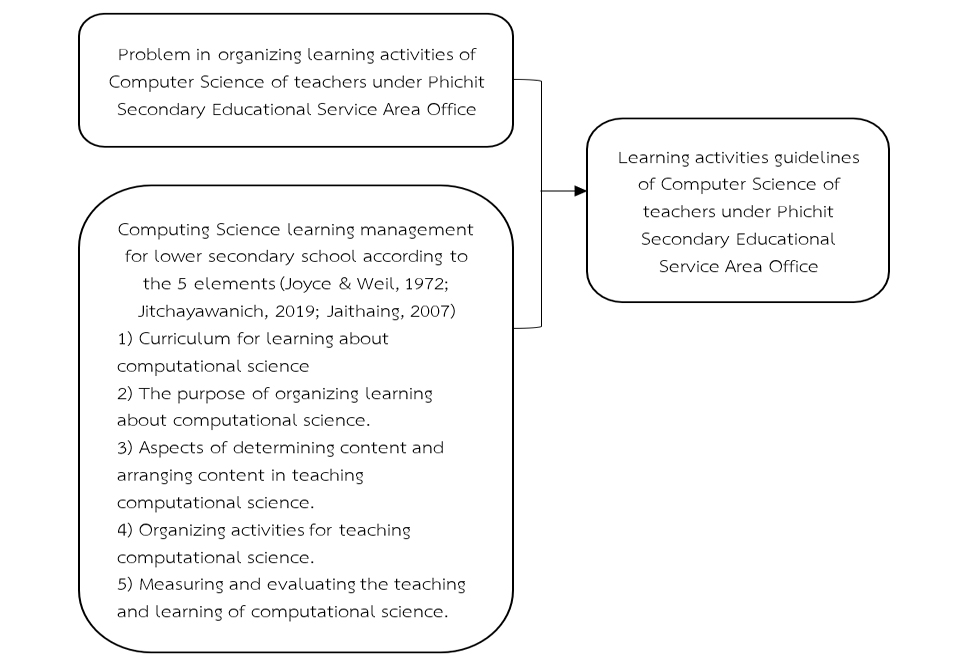
การวิจัยในครั้งนี้มีวัตถุประสงค์ 1) เพื่อศึกษาสภาพปัญหาการจัดกิจกรรมการจัดการเรียนรู้วิทยาการคำนวณของครูผู้สอน สังกัดสำนักงานเขตพื้นที่การศึกษามัธยมศึกษาพิจิตร และ 2) เพื่อศึกษาแนวทางการจัดกิจกรรมการเรียนรู้วิทยาการคำนวณของครูผู้สอน สังกัดสำนักงานเขตพื้นที่การศึกษามัธยมศึกษาพิจิตร กลุ่มตัวอย่างในการศึกษาในครั้งนี้คือครูผู้สอนรายวิชาวิทยาการคำนวณ สังกัดสำนักงานเขตพื้นที่การศึกษามัธยมศึกษาพิจิตร อำเภอเมือง จังหวัดพิจิตร จำนวน 30 คน โดยวิธีการสุ่มแบบโควต้า เครื่องมือในการศึกษาคือ แบบสอบถามสภาพปัญหาในการจัดกิจกรรมการเรียนรู้สำหรับครูผู้สอนวิทยาการคำนวณ สังกัดสำนักงานเขตพื้นที่การศึกษามัธยมศึกษาพิจิตร สถิติที่ใช้ในการวิเคราะห์ข้อมูลได้แก่ ร้อยละ และค่าเฉลี่ย ผลการศึกษาครั้งนี้พบว่า 1) สภาพปัญหากิจกรรมการจัดการเรียนรู้วิทยาการคำนวณของครูผู้สอน สังกัดสำนักงานเขตพื้นที่การศึกษามัธยมศึกษาพิจิตร เมื่อพิจารณาประเด็น พบว่า การจัดกิจกรรมการเรียนการสอนให้ผู้เรียนใช้แนวคิดเชิงคำนวณ ที่มีปัญหามาก มีค่าเฉลี่ยเท่ากับ 3.80 และ 2) ผลการศึกษาแนวทางการจัดกิจกรรมการเรียนรู้วิทยาการคำนวณของครูผู้สอน สังกัดสำนักงานเขตพื้นที่การศึกษามัธยมศึกษาพิจิตร ได้ใช้หลักการโมเดลแอดดี้มาเป็นแนวทางเสนอแนะ
Downloads
เอกสารอ้างอิง
Dongtanengineer. (2018). Computational Science. https://dongtanengineer.com/content/news/184. (In Thai)
Durak, H. Y., & Saritepeci, M. (2018). Analysis of the Relation between Computational Thinking Skills and Various Variables with the Structural Equation Model. Computers & Education, 116, 191–202. https://doi.org/10.1016/j.compedu.2017.09.004.
Fessakis, G., & Prantsoudi, S. (2019). Computer Science Teachers’ Perceptions, Beliefs and Attitudes on Computational Thinking in Greece. Informatics in Education, 18(2), 227-258.
Institute for the Promotion of Teaching Science and Technology. (2017). Manual for Using the Technology Curriculum (Computational Science) Science Learning Group (Revised Edition 2017) According to the Basic Education Core Curriculum, B.E. 2008 Technology Content (Computational Science) Primary and Secondary Level. Ministry of Education. (In Thai)
Jaithaing, A. (2007). Principle of Teaching (4th ed.). Odeon Store. (In Thai).
Jitchayawanich, K. (2019). Learning Management. Chulalongkorn University Press. (In Thai).
Joyce, B., & Weil, M. (1972). Models of Teaching. Englewood Cliffs.
Kuna, K. (2021). Analysing the Development Process of Teacher's Learning Management in Computing Sciences and the Effects on Students: Mixed Method Research. [Master's dissertation, Chiang Mai University]. https://cmudc.library.cmu.ac.th/frontend/Info/item/dc:161683. (In Thai).
Ministry of Education. (2017). Learning Standards and Indicators Mathematics, Science and Geography Subject Group in the Learning Subject Group Social Studies, Religion and Culture (Revised Edition 2017) According to the Basic Education Core Curriculum, B.E. 2008. Thailand Agricultural Cooperative Community Printing Company Limited. (In Thai).
Office of the Education Council. (2021). Guidelines for Promoting Teaching and Learning Management in Language Science, Mathematics, and Coding to Develop Learners' Skills in the 21st Century. 21 Century Print. (In Thai)
Pee Mint. (2018). New Semester, You'll Definitely Meet Them! Grade 1, Grade 4, Grade 7, Grade 10, You are the Lucky Ones. You'll be the First to Learn New Basic Subjects, Teaching Programming. https://www.dek-d.com/education/48514. (In Thai).
Richey, R. C., Klein, J. D., & Tracey, M. W. (2011). The Instructional Design Knowledge Base. Routledge.
Sadik, O., Ottenbreit-Leftwich, A., & Brush, T. (2020). Secondary Computer Science Teachers’ Pedagogical Needs. International Journal of Computer Science Education in Schools, 4(1), 33–52. https://doi.org/10.21585/ijcses.v4i1.79.
Santueankaew, A., & Chaowachai, S. (2021). Computing Science Learning Management Plan under the Secondary Education Service Area Office 37. Journal of MCU Nakhondhat, 8(3), 275–287. (In Thai)
Saraprang, W., Sinlapaninman, U., & Yonwilad, W. (2024). The Study of the Needs to Develop Computational Thinking Skills in Computing Science for Junior High School Students. Kalasin University Journal of Humanities Social Sciences and Innovation, 3(1), 52–67. https://doi.org/10.14456/hsi.2024.5. (In Thai)
Wang, M., & Wang, Y. F. (2016). A Study on Computer Teaching Based on Computational Thinking. International Journal of Emerging Technologies in Learning, 11(12), 72–74. https://doi.org/10.3991/ijet.v11i12.6069.
Wangsalae, S., & Swengam, W. (2021). Guidelines of Computing Science Instruction for Lower Secondary school. Journal of the Association of Researchers, 26(1), 116–132.
Yadav, A., Gretter, S., Good, J., & McLean, T. (2017). Computational Thinking in Teacher Education. In Rich, P. J., & Hodges, C. B. (Eds.), Emerging Research, Practice, and Policy on Computational Thinking (205–220). Springer International Publishing. https://doi.org/10.1007/978-3-319-52691-1_13.
Yasaka, S., & Suksakulchai, S. (2020, July 9-10). Study of Status, Problems, and Needs of Computing Science Learning Management. The 12th NPRU National Academic Conference, 2191 – 2199. Nakhon Pathom Rajabhat University. (In Thai)
ดาวน์โหลด
เผยแพร่แล้ว
รูปแบบการอ้างอิง
ฉบับ
ประเภทบทความ
หมวดหมู่
สัญญาอนุญาต
ลิขสิทธิ์ (c) 2025 วารสารคอมพิวเตอร์และเทคโนโลยีสร้างสรรค์

อนุญาตภายใต้เงื่อนไข Creative Commons Attribution-NonCommercial-NoDerivatives 4.0 International License.