The Development of Learning Achievement on Using Microsoft Word through Animation Media Combined with Practice Learning of Grade 4 Students
DOI:
https://doi.org/10.65205/jcct.2025.2303Keywords:
Animation, Practice-based Learning, Microsoft WordAbstract
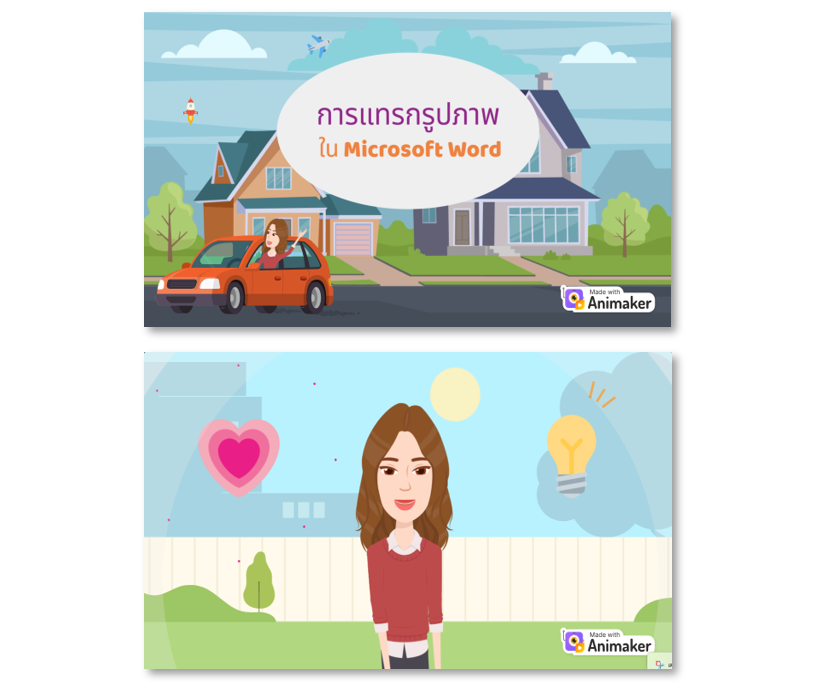
The objectives of this research were 1) to develop an animation on the use of Microsoft Word for Grade 4 students, 2) to improve students' learning outcomes through a learning process using animation media about using the Microsoft Word program combined with the practice learning approach, and 3) to study students' satisfaction with the teaching and learning process using animation about using the Microsoft Word program combined with the practice learning approach. The sample group consists of 37 Grade 4/7 students at Muang Surin School, located on Jang Wang Road, Nai Muang Subdistrict, Mueang Surin District, Surin Province. The research tools used in this study include 1) one lesson plan, 2) one piece of animation media, 3) an achievement test, and 4) a satisfaction questionnaire. The statistics employed in the research are the mean, percentage, standard deviation, and Paired Sample T-Test. The research findings can be summarized as follows: 1. The instructional media, which included animation combined with hands-on teaching, demonstrated efficiency during the learning activity (E1), with a mean score of 36.34, equivalent to 91.62%. The effectiveness of the post-learning test results (E2) had a mean score of 16.67, representing 83.38%. It was found that both values exceeded the specified criterion of 80/80. 2. The average scores from the learning management system using animation combined with practice-based teaching showed that students had a mean score of 8.51 before the lesson and a mean score of 16.67 after the lesson. The test of differences in means indicates that post-learning achievement is significantly higher than pre-learning achievement at the .05 level of statistical significance. 3. The satisfaction of Grade 4 students who learned using animation combined with practice-based teaching was found to be at the highest level, with an average score of 4.67 and a standard deviation of 0.46.
Downloads
References
Brodie, K. (2014). Sustained Shared Thinking in the Early Years: Linking Theory to Practice. Routledge. https://doi.org/10.4324/9781315774497.
Chatchawanpreecha, D. (2023). Activity-based Learning to Enhance Learning Achievement Using Activity Sets: A Study on Changes of Objects and Materials in Science and Technology for Grade 3 Students at Ban San Champa Community School, Chiang Rai Province. Research Report. Ban San Champa Community School. (In Thai)
Damjub, W. (2023). Animation Media Design for Teaching Development. Sripatum Chonburi Interdisciplinary Journal, 9(1), 1 - 20. (In Thai)
Dick, W., Carey, L., & Carey, J. O. (2011). The Systematic Design of Instruction (7th ed.). Pearson.
Kolb, D. A. (1984). Experiential Learning: Experience as the Source of Learning and Development. Prentice Hall.
Mandin, S. R., Martin, A. B., Abatol, S. A. M. C., & Bansale, J. C. (2025). Grade 8 Students’ Academic Achievement in World History Using Jigsaw. Indonesian Journal of Education and Pedagogy, 2(1), 1 - 10. https://doi.org/10.61251/ijoep.v2i1.93.
Manin, T., Sawagpun, P., & Kijkuakul, S. (2015). A Study of Academic Achievement and Awareness in the Five Precepts Buddhism of Prathomsuksa 6 Students When Using Cartoon Animation. Journal of Education Naresuan University, 16(4), 146 - 154. (In Thai)
Mayer, R. E. (2009). Multimedia Learning (2nd ed.). Cambridge University Press.
Moolka, S. (2002). Complete Guide to Being a Facilitator. Phap Phim Publishing. (In Thai)
Noipong, S., & Sungkavadee, K. (2016). The Use of 2D Animation with Achievement of Wonderland Forest Subject for Grade 9 Students. Journal of Southern Technology, 9(1), 7 - 11. (In Thai)
Piromkaew, P., & Kanperm, J. (2015). The Development of Animated Cartoon on Howdy English for Prathomsuksa 2 Students. VRU Research and Development Journal Humanities and Social Science, 10(2), 311 - 317. (In Thai)
Pueanthim, N. (2024). Developing Practice-Based Learning Activities to Enhance Fashion Design Skills Using Local Products for Fine Arts Students. Interdisciplinary Academic and Research Journal, 4(4), 37 - 52. https://doi.org/10.60027/iarj.2024.2768210. (In Thai)
Rohland, L. (2023). Practice (Learning Method). https://www.ebsco.com/research-starters/religion-and-philosophy/practice-learning-method.
Sansuwan, P., & Thepnuan, N. (2020). The Development of Cartoon Animation on Mathematical Problems Solution Through Characters in Thai Folk Tale that Affects Skills Solving Mathematical Problems for Primary 4 (Grade 4) Students. Journal of Buddhist Anthropology, 5(4), 220 - 233. (In Thai)
Srisodapon, S., & Dangchamroon, A. (2024). The Development of Animations on the Biography of Exemplary Buddhist Disciples and Jataka Tales for Grade 9 Students at Rasisalai School. Journal of Modern Learning Development, 9(7), 58 - 72. (In Thai)
Thaluang, C., & Rungsoongnern, P. (2024). The Study Results of Perception and Satisfaction of Elementary School Students with 2D Animation Cartoon: Primal Hunter. Journal of Applied Informatics and Technology, 6(2), 242 - 261. https://doi.org/10.14456/jait.2024.14. (In Thai)
Uppala, S. (2022). Developing Learning Achievement on Plant Propagation Through Practical Learning for Grade 10 Students at Rajaprachanukroh 15 School (Wiang Kao Saenphu Witthayaprasart). Research Report. Rajaprachanukroh 15 School. (In Thai)
Downloads
Published
How to Cite
Issue
Section
Categories
License
Copyright (c) 2025 Journal of Computer and Creative Technology

This work is licensed under a Creative Commons Attribution-NonCommercial-NoDerivatives 4.0 International License.