
THE GUIDELINES FOR CREATING THE SOCIAL COLLABORATION NETWORK (PARTNERSHIP) TOWARDS SUSTAINABLE AGRONOMY FOR BALANCING DEVELOPMENT GOALS
Keywords:
Social collaboration networking, Sustainable Agronomy, Balanced developmentAbstract
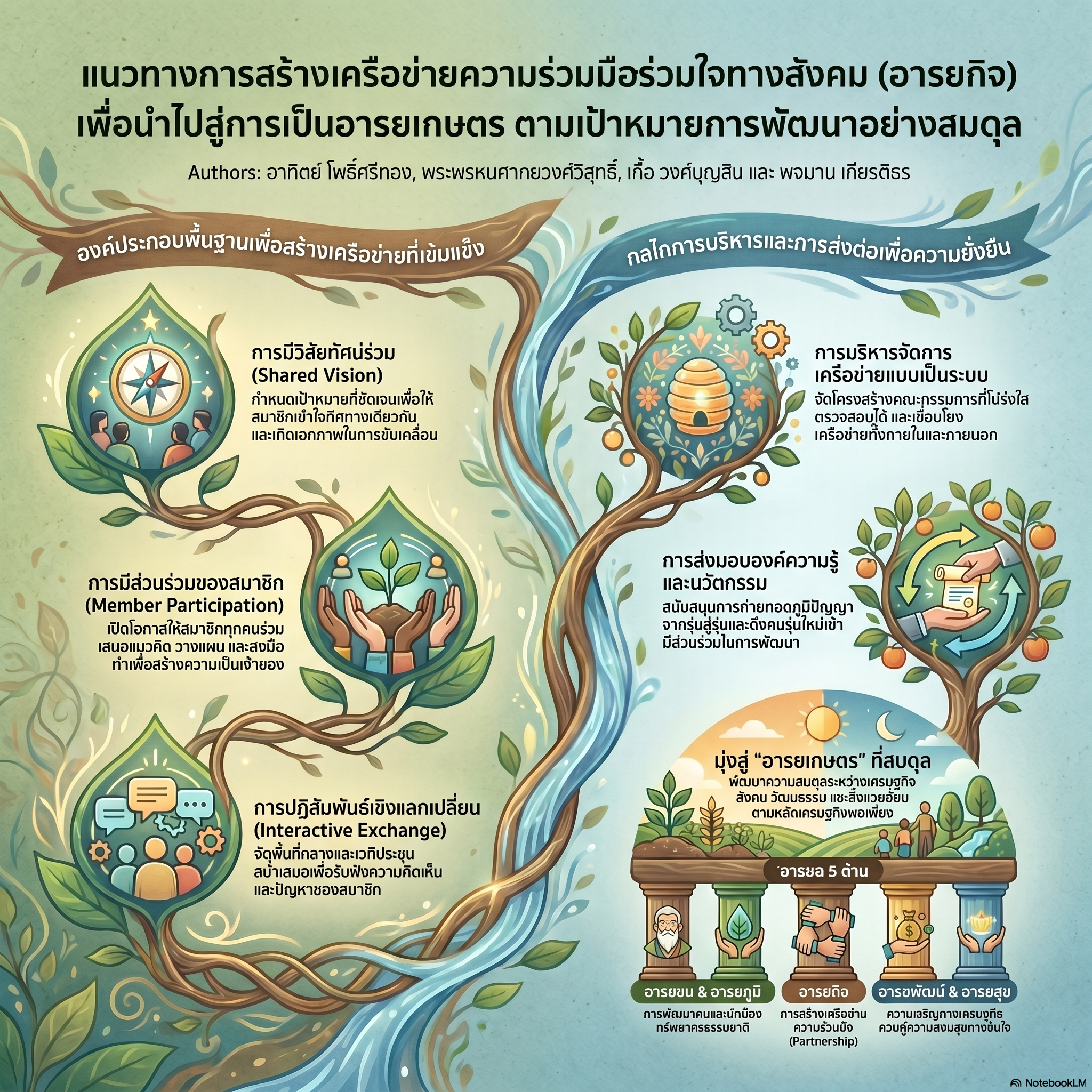
This research aims to analyze the components and processes of social collaborative networking (Arya Civic) towards balanced agricultural development. Employing a qualitative research methodology, data was collected through in-depth interviews with 24 stakeholders across four target communities and focus group discussions with 10 expert informants, utilizing purposive sampling techniques. The study identified five critical components of social collaborative networking: 1) Shared Vision: The network establishes clear objectives, with members comprehensively understanding and collectively driving strategic directions through collaborative dialogue and consensus-building processes. 2) Member Participation: Providing comprehensive opportunities for members to fully engage, including idea generation, collaborative planning, and community development activities, thus fostering motivation and organizational ownership. 3) Interactive Exchange: Implementing systematic village committee meetings to regularly gather member perspectives and needs, while creating neutral platforms for communication and knowledge exchange. 4) Network Management: Developing systematic organizational structures with clear committee roles, emphasizing participatory principles, transparency, and effective internal and external network connections. and 5) Knowledge and Innovation Transfer: Supporting intergenerational knowledge transmission through family networks, relatives, and local wisdom bearers, focusing on cultural preservation, local intellectual heritage conservation, and promoting sustainable youth engagement.
References
กรมการพัฒนาชุมชน กระทรวงมหาดไทย. (2561). คู่มือการพัฒนาชุมชนเศรษฐกิจพอเพียง (พิมพ์ครั้งที่ 2). กรุงเทพมหานคร: บีทีเอสเพรส.
ธนพฤกษ์ ชามะรัตน์. (2554). การสร้างเครือข่ายทางสังคมของเกษตรกรอีสาน (วิทยานิพนธ์ดุษฎีบัณฑิต, มหาวิทยาลัยขอนแก่น, ประเทศไทย).
พระธรรมศากยวงศ์วิสุทธิ์. (2565). เราจะพัฒนาไปสู่การเป็นอารยเกษตรตามเป้าหมายการพัฒนาอย่างสมดุลได้อย่างไร. เอกสารประกอบการประชุม, วัดบวรนิเวศวิหาร.
พระไพศาล วิสาโล. (2560). การพัฒนาชุมชนและการศึกษาแบบองค์รวม: แนวทางการปฏิบัติที่ยั่งยืน. กรุงเทพฯ: วัดธาตุทอง.
วรรณภา ทองแดง. (2561). เป้าหมายการพัฒนาที่ยั่งยืน ข้อที่ 17 “การสร้างพลังแห่งการเป็นหุ้นส่วนความร่วมมือระดับสากลต่อการพัฒนาที่ยั่งยืน”. มหาวิทยาลัยพะเยา, คณะรัฐศาสตร์และสังคมศาสตร์.
สนธยา พลศรี. (2550). เครือข่ายการเรียนรู้ในงานพัฒนาชุมชน (พิมพ์ครั้งที่ 2). กรุงเทพฯ: โอเดียนสโตร์.
เสน่ห์ จามริก. (2544). การศึกษาความสัมพันธ์ของการพัฒนาเศรษฐกิจและสังคมในชุมชน (วิทยานิพนธ์ครุศาสตร์มหาบัณฑิต, สถาบันราชภัฏสวนสุนันทา, ประเทศไทย).
สำนักงานคณะกรรมการพัฒนาการเศรษฐกิจและสังคมแห่งชาติ. (2565). แผนพัฒนาเศรษฐกิจและสังคมแห่งชาติ ฉบับที่ 13 (พ.ศ. 2565 - 2570). สภานิติบัญญัติแห่งชาติ. ราชกิจจานุเบกษา.
McFarland, D. E. (1961). Management foundation and practices. New York: McGraw-Hill.
United Nations. (2018). United Nations Partnership Framework (UNPAF) 2019–2023. The United Nations System in Namibia.
Downloads
Published
How to Cite
Issue
Section
Categories
License
Copyright (c) 2025 Faculty of Education, Srinakharinwirot university

This work is licensed under a Creative Commons Attribution-NonCommercial-NoDerivatives 4.0 International License.


