
Open access
ISSN: 3027-6721
Journal Workflow Process
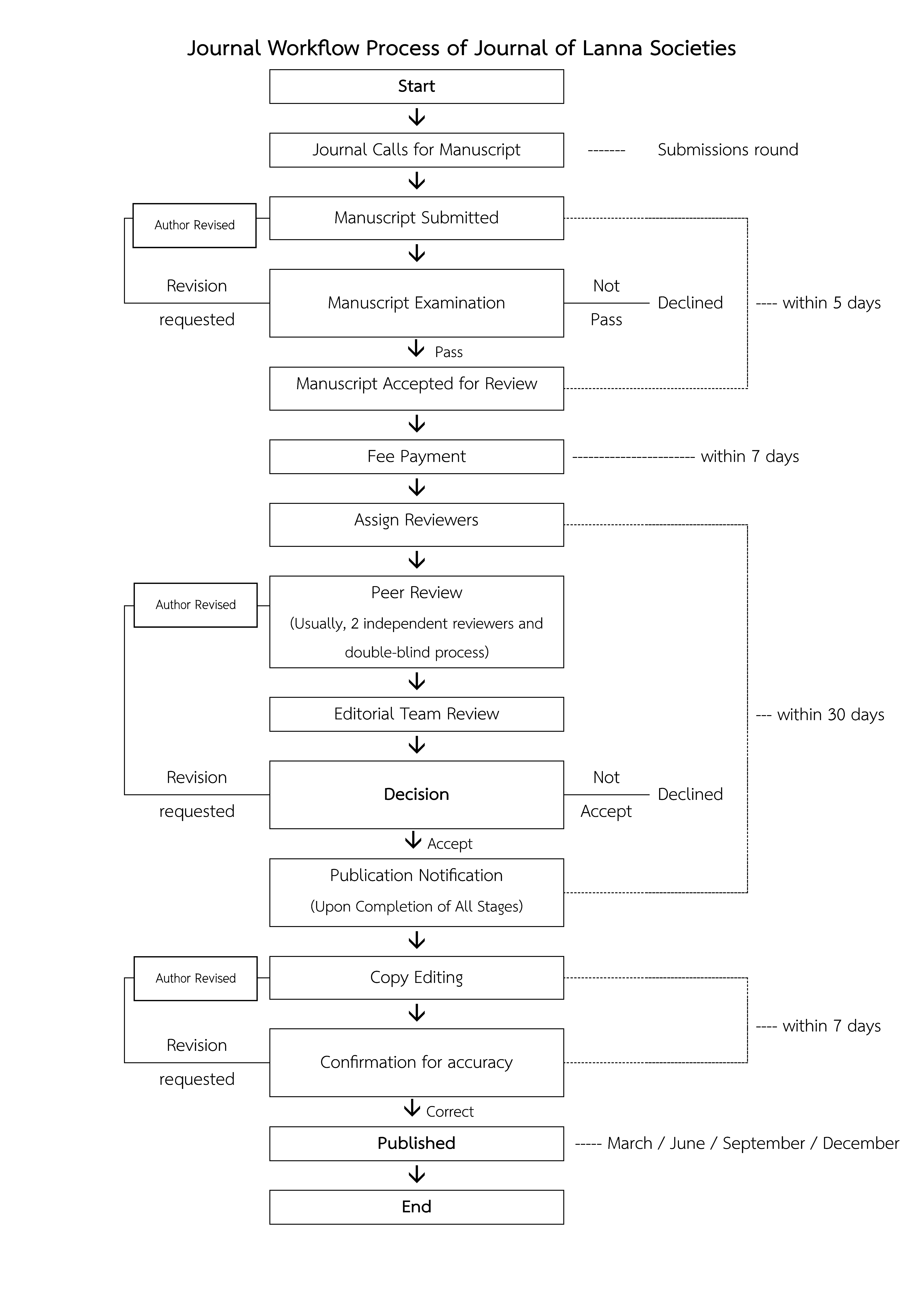
Step 1: Manuscript submission
Authors initiate the submission process by submitting their manuscripts through the user-friendly ThaiJO online system. This ensures a seamless reception, processing, and review by the JLS editorial team. The online system streamlines the submission process, maintaining organization and consistency for efficient review and publication. If the author is unable to do so, JLS might consider accepting the submission by email. But this should be the last choice.
Step 2: Initial Evaluation by the editor-in-chief
JLS conducts an initial plagiarism check using an internal system. Manuscripts with a plagiarism percentage exceeding 30% (excluding the reference list) face immediate rejection. At this stage, a manuscript may be rejected without peer review if it is felt that it is not of high enough priority, not relevant to the journal’s aim and scope, does not meet journal’s standards in terms of quality, or if it involves plagiarism. This fast rejection process means that authors are given a quick decision and do not need to wait for the review process.
Step 3: Assignment of Reviewers
JLS employs a double-blinded review system with a minimum of 3 expert reviewers. The journal uses a double-blind peer review system, in which the author does not know the identities of the reviewers and the reviewers do not know the identities of the author. Invited reviewers are usually not affiliated with the same institution. They must also be affiliated with a different institution from the author. The editor-in-chief carefully selects reviewers who have sufficient subject matter expertise to do justice to the manuscript. For some niche subject areas, the editor-in-chief might ask the author to recommend a list of possible reviewers from which the editor-in-chief might consider choosing.
Step 4: Review Process and Duration
Reviewer Instructions:
- Reviewers provide detailed and constructive comments within a 4-week timeframe.
- Comments aim to assist authors in improving their manuscripts.
Timeline:
- Review process spans 3-4 weeks, ensuring thorough evaluation.
- Author identities remain confidential during the review.
Review Evaluation:
- Editor assesses reviewer comments and manuscript adherence to publication conditions. The editor-in-chief evaluates the reviews and recommendations made by the reviewers. If the reviews by the reviewers are significantly different, the editor-in-chief will make a final decision or invite another reviewer to evaluate.
- Decision options: accept, reject, or request revisions.
Additional Reviewers:
- If initial reviewer feedback lacks depth, editor may invite additional reviewers.
- Divergent opinions may prompt extra review before the final decision.
Decision Options:
- Editor conveys the decision (accept, reject, or request revisions.) and relevant comments to authors via the online system.
- All comments and suggestions maintain anonymity.
Step 5: Revision by author
After receiving the review results, the author is invited to revise the manuscript according to the suggestions. If there are any points that the author fails to address, he/she must inform the editor-in-chief in writing. A revised version of the manuscript must be submitted to the editor-in-chief within two weeks. A longer period of time can be provided if the manuscript needs major revisions.
Step 6: Publication of the Manuscript
After receiving the revised manuscript, the editor-in-chief will review the revisions. The editor-in-chief then makes a final decision whether to accept the revised manuscript or not. Manuscripts that pass this final stage will proceed to English language editing by a native English speaker, reference editing, and copy editing before being published.



