The Role of Human Relations in Building Positive Workplace Relationships
Article Sidebar
Main Article Content
Abstract
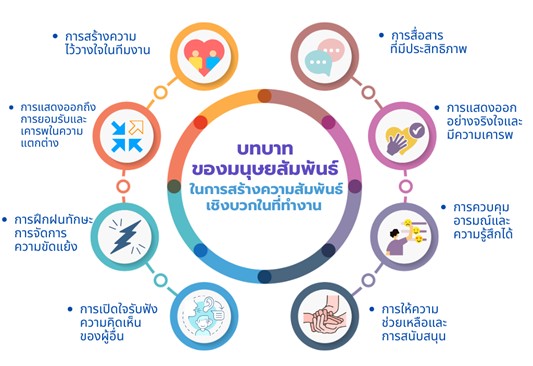
Human relations in the workplace play an important role in creating and promoting good relationships among employees in an organization, which affects the development and enhancement of a collaborative and efficient working atmosphere. Good relationships lead to effective collaboration, resulting in employee satisfaction and positive outcomes in the organization. Building good human relations in the workplace begins with clear and transparent communication. When employees’ opinions are heard and respected, it allows for an open exchange of information and ideas. Good communication allows individuals to clearly understand the organization’s goals and objectives and have a direction for teamwork. In addition, building good relationships helps reduce conflicts in the workplace, which can negatively affect work efficiency. Resolving problems or misunderstandings using good human relations allows all parties to reach a mutually beneficial resolution. Finally, good human relations in the workplace also affects employee job satisfaction. When employees feel like they are part of the organization and have good relationships with their colleagues, they are motivated to work, resulting in better work efficiency and organizational outcomes. In conclusion, good human relations are an important tool in creating positive relationships in the workplace, which not only increases work efficiency, but also helps employees to be happy at work and sustainably promotes the organization’s success.
Article Details
References
จอมพงศ์ มงคลวนิช. (2556). การบริหารองค์การและบุคลากรทางการศึกษา. (พิมพ์ครั้งที่ 2). กรุงเทพมหานคร: วีพริ้นท์.
จันทรานี สงวนนาม. (2551). ทฤษฎีและแนวปฏิบัติในการบริหารสถานศึกษา. (พิมพ์ครั้งที่ 2). กรุงเทพมหานคร: บุ๊ค พอยท์.
จำนงค์ นามมา. (2563). มิติของการสร้างมนุษย์สัมพันธ์ในองค์การ Dimensions of Building Interpersonal Relationships in The Organization. วารสาร มจร อุบลปริทรรศน์, 6(2), 779-790.
ชนิดา จิตตรุทธะ. (2560). วัฒนธรรมองค์การ ปัจจัยสู่ความสำเร็จที่ยั่งยืน. (พิมพ์ครั้งที่ 3). กรุงเทพมหานคร: จุฬาลงกรณ์มหาวิทยาลัย.
เตชสิทธิ์ ชินประพินพร. (2559). การศึกษาบุคลิกภาพ วัฒนธรรมองค์กรการใช้เทคโนโลยี และการยอมรับเทคโนโลยีที่มีผลต่อประสิทธิผลในการใช้เทคโนโลยีในองค์กรของพนักงานราชการในกรุงเทพมหานคร. การค้นคว้าอิสระบริหารธุรกิจมหาบัณฑิต. มหาวิทยาลัยกรุงเทพ.
นิมาลีกี ใบสะเม๊าะ. (2564). พฤติกรรมด้านมนุษยสัมพันธ์ของผู้บริหารสถานศึกษาในสังกัดสำนักงานเขตพื้นที่การศึกษาประถมศึกษาปัตตานี เขต 3. วิทยานิพนธ์ครุศาสตรมหาบัณฑิต.มหาวิทยาลัยราชภัฏยะลา.
บุษบง ธัยมาตร. (2560). การสร้างมนุษยสัมพันธ์ในหน่วยงาน. วารสาร มจร สังคมศาสตร์ปริทรรศน์, 6(2), 353-368.
พรรณทิพย์ ศิริวรรณบุศย์. (2563). จิตวิทยาพัฒนาการ. กรุงเทพมหานคร: สำนักพิมพ์จุฬาลงกรณ์มหาวิทยาลัย.
ภารดี อนันต์นาวี. (2557). หลักการ แนวคิด ทฤษฎีทางการบริหารการศึกษา. กรุงเทพมหานคร: สำนักพิมพ์มนตรี จำกัด.
ราชบัณฑิตยสถาน. (2546). พจนานุกรมฉบับราชบัณฑิตยสถาน พ.ศ. 2542. กรุงเทพมหานคร: นานมีบุ๊คส์ พับลิเคชั่นส์.
ลิขิต ศรีแสนชัย. (2562). การปฏิบัติงานด้วยการสร้างมนุษยสัมพันธ์ที่ดีภายในองค์กร. Journal of Modern Learning Development, 4(2), 12-20.
Barnard, Chester I. (1964). The Function of the Executive. Cambridge., Mass: Harvard. University Press.
Davis, F.F. (1957). Mercury. In L.A. Wright (Ed.), Mineral Commodities of California: California Division of Mines Bulletin, 176, 341-356.
Dubrin, Andrew, J. (1981). Personal and Human Resource Management. New York: D. Van Nostrand.
Flippo. (1966). Principles of Management. (2 nd ed). Tokyo: Kogakusha.
Reece, Barry L; & Brandit, Rhonda. (1997). Human Relations: Principles and Practices. New York: Houghton Mifflin.
