IMPLEMENTING BUDDHIST DHARMA TO STRENGTHEN THE CORE COMPETENCIES OF SCHOOL ADMINISTRATORS: A CASE STUDY OF PHRA NAKHON SI AYUTTHAYA PRIMARY EDUCATIONAL SERVICE AREA OFFICE 2
Article Sidebar
Main Article Content
Abstract
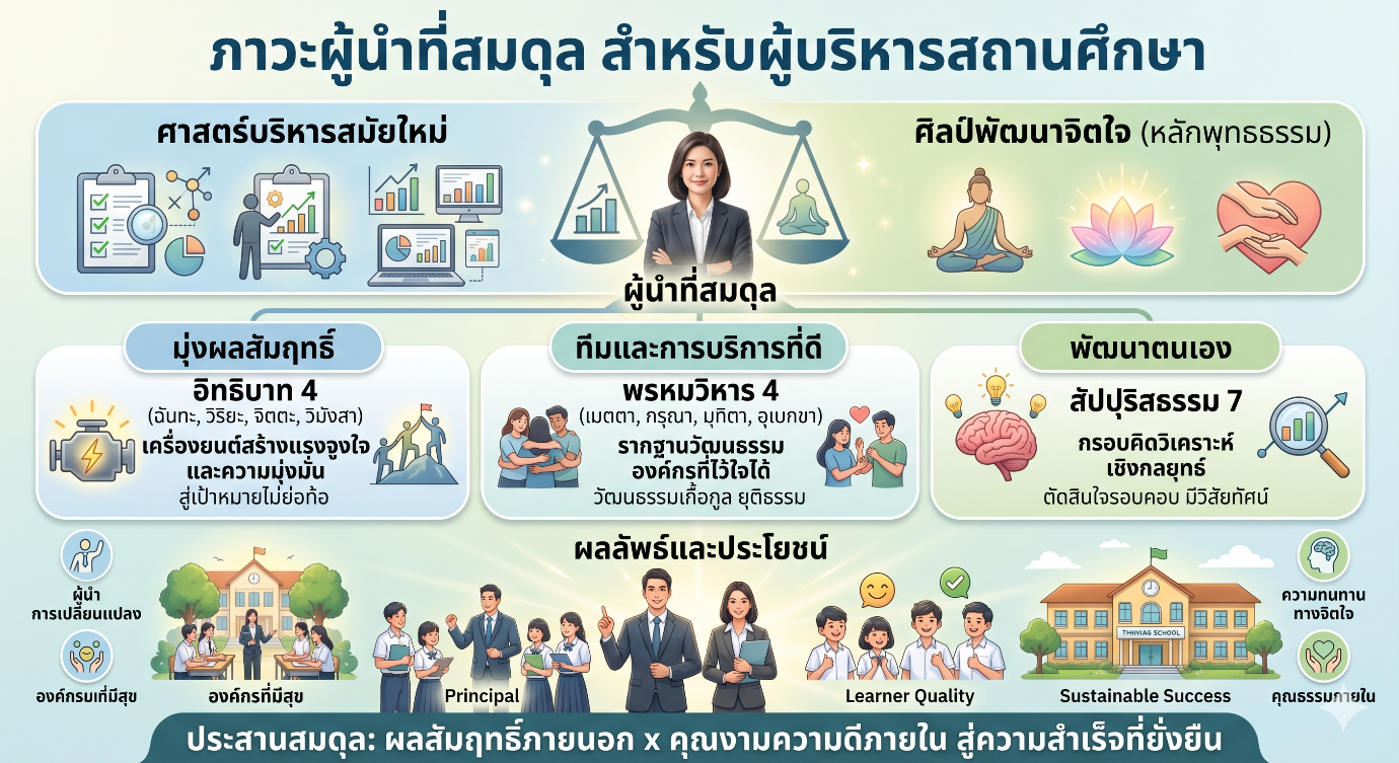
This academic article aimed to present a guideline for applying Buddhist principles to enhance the core competencies of school administrators and to develop a conceptual framework for application within the context of the Phra Nakhon Si Ayutthaya Primary Educational Service Area Office 2. The study employed a method of synthesizing relevant documents and research to create an integrated conceptual framework. This framework linked four core competencies—namely, achievement orientation, service mind, self-development, and teamwork—with three key Buddhist principles: Iddhipada 4, Brahmavihara 4, and Sappurisa-dhamma 7. The study found that the application of Iddhipada 4 enhanced the achievement orientation competency, Brahmavihara 4 strengthened the teamwork and service mind competencies, and Sappurisa-dhamma 7 fostered the self-development competency. This approach established a “Balanced Leadership” that integrated the science of modern administration with the art of mental development. It complemented the moral, ethical, and human relations dimensions that Western administrative science might not fully address. It also helped build psychological resilience for administrators in facing challenges and was consistent with Thai culture, which facilitated its acceptance and implementation. The article concluded and recommended that the parent organization use this framework to develop training courses, create a mentoring system, and adjust evaluation criteria. Meanwhile, school administrators could use it as a guide for self-reflection, being a role model, and building a learning community within their organizations to ultimately lead to sustainable educational quality development.
Article Details
References
เกียรติศักดิ์ การศึกษาไทย. (2565). สมรรถนะหลักที่ส่งผลต่อประสิทธิผลการบริหารงานวิชาการของผู้บริหารสถานศึกษา สังกัดสำนักงานคณะกรรมการการศึกษาขั้นพื้นฐาน. วารสารศึกษาศาสตร์ มหาวิทยาลัยนเรศวร, 24(1), 115-129.
ชัยเสฏฐ์ พรหมศรี. (2561). ภาวะผู้นำเชิงพุทธ: กระบวนทัศน์และนวัตกรรมการบริหาร. กรุงเทพมหานคร: สำนักพิมพ์ปัญญาชน.
พระพรหมคุณาภรณ์ (ป. อ. ปยุตฺโต). (2560). พุทธธรรม ฉบับปรับปรุงและขยายความ. กรุงเทพมหานคร: สำนักพิมพ์ผลิธัมม์.
มนตรี จิตตภาวนา. (2562). อิทธิบาท 4: กรอบแนวคิดในการพัฒนาสมรรถนะด้านการมุ่งผลสัมฤทธิ์สำหรับผู้บริหาร. วารสารการบริหารและนิเทศการศึกษา มหาวิทยาลัยมหาสารคาม, 10(3), 45-58.
วิโรจน์ สารรัตนะ. (2556). กระบวนทัศน์ใหม่ทางการบริหารการศึกษา: กรณีท้าทายที่ต้องแสวงหา. กรุงเทพมหานคร: ทิพยวิสุทธิ์.
สมชาย พัฒนาดี และวิภาวรรณ จริยธรรม. (2564). รูปแบบการพัฒนาภาวะผู้นำเชิงพุทธของผู้บริหารสถานศึกษาในยุคดิจิทัล. วารสารครุศาสตร์ จุฬาลงกรณ์มหาวิทยาลัย, 49(2), 88-102.
สำนักงานคณะกรรมการข้าราชการพลเรือน. (2553). คู่มือการกำหนดสมรรถนะในราชการพลเรือน: สมรรถนะหลัก. สำนักงานคณะกรรมการข้าราชการพลเรือน: ศูนย์นักบริหารระดับสูง สำนักงาน ก.พ.
สุพัตรา อยุธยาพัฒนา. (2563). การประยุกต์ใช้หลักสัปปุริสธรรม 7 เพื่อเสริมสร้างสมรรถนะการบริหารงานของผู้บริหารสถานศึกษาในจังหวัดพระนครศรีอยุธยา. ปริญญานิพนธ์การศึกษามหาบัณฑิต. มหาวิทยาลัยศรีนครินทรวิโรฒ.
อภิญญา วนารมย์. (2564). การบริหารสถานศึกษาตามหลักพรหมวิหาร 4 เพื่อส่งเสริมวัฒนธรรมองค์กรเชิงบวก. วารสารวิชาการและวิจัยสังคมศาสตร์, 16(1), 135-148.
