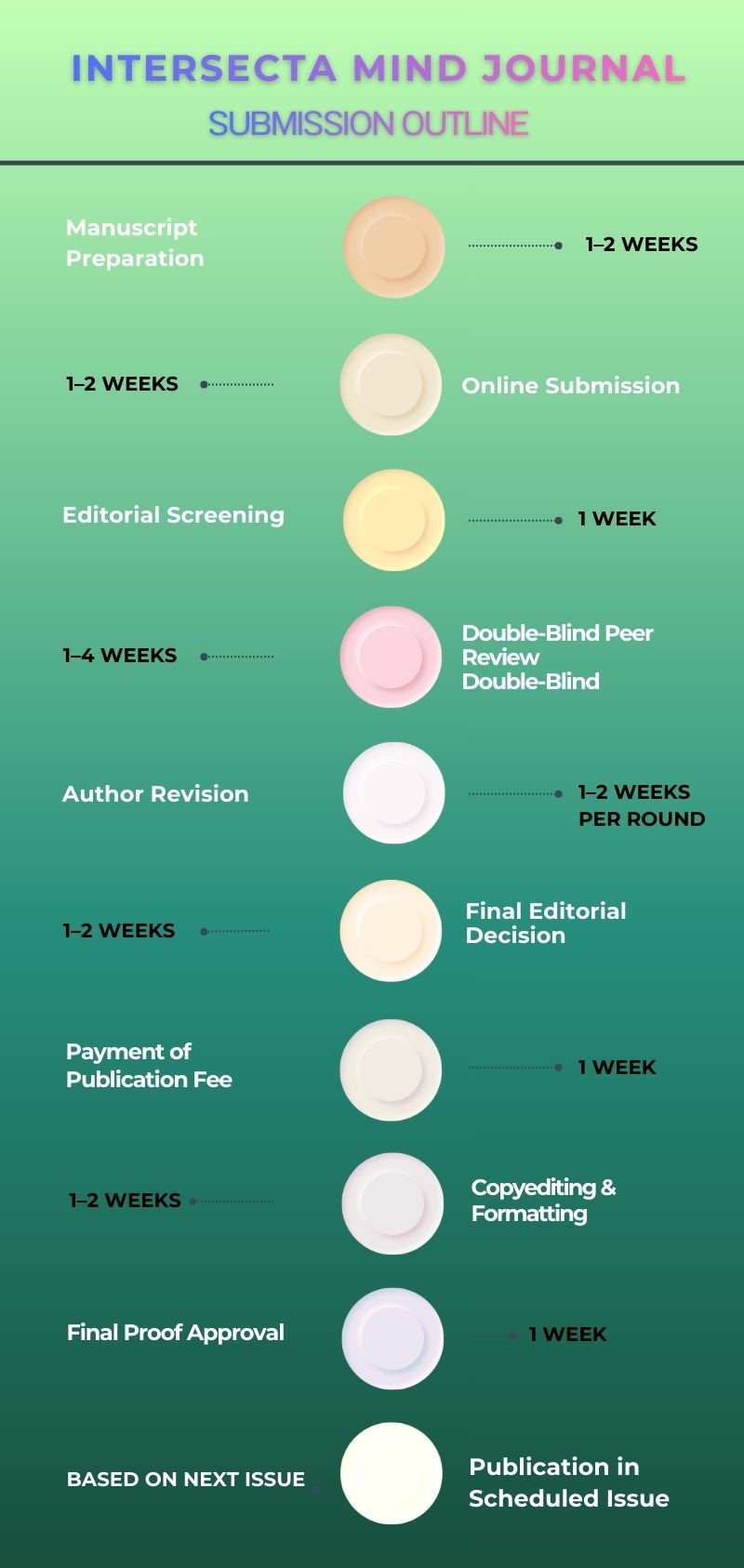
Innovation Management: Strategies for Fostering Creativity and Driving Business Growth
Keywords:
Innovation Management;, Strategies;, Fostering Creativity;, Business GrowthAbstract
Innovation is increasingly recognized as a key driver of organizational success and competitive advantage in today's rapidly evolving business landscape. This paper explores the critical role of innovation management in fostering creativity and driving business growth. Through a comprehensive review of literature and case studies, the paper examines various strategies and approaches employed by organizations to cultivate a culture of innovation and harness creative potential. It explores the importance of leadership, organizational structures, and supportive ecosystems in facilitating innovation initiatives. Furthermore, the paper investigates the challenges and barriers that organizations face in managing innovation and offers practical insights and recommendations for overcoming these obstacles. By elucidating the nexus between innovation management, creativity, and business growth, this paper provides valuable insights for practitioners and scholars seeking to navigate the complexities of innovation in the modern business environment.
References
Acs, Z. J., & Audretsch, D. B. (2010). Entrepreneurship and innovation. MIT Press.
Amabile, T. M. (1998). How to kill creativity. Harvard Business Review, 76(5), 77-87.
Amabile, T. M., & Khaire, M. (2008). Creativity and the role of the leader. Harvard Business Review, 86(10), 100-109.
Audretsch, D. B., & Feldman, M. P. (1996). R&D spillovers and the geography of innovation and production. The American Economic Review, 86(3), 630-640.
Beck, K., Beedle, M., van Bennekum, A., Cockburn, A., Cunningham, W., Fowler, M., ... & Thomas, D. (2001). Manifesto for agile software development. Retrieved from http://agilemanifesto.org/
Birkinshaw, J., Hamel, G., & Mol, M. J. (2008). Management innovation. Academy of Management Review, 33(4), 825-845.
Blank, S. (2013). Why the lean start-up changes everything. Harvard Business Review, 91(5), 63-72.
Brown, T. (2008). Design thinking. Harvard Business Review, 86(6), 84-92.
Brown, T., & Katz, B. (2009). Change by design: How design thinking transforms organizations and inspires innovation. HarperBusiness.
Chesbrough, H. W. (2003). Open innovation: The new imperative for creating and profiting from technology. Harvard Business Press.
Chesbrough, H. W., & Bogers, M. (2014). Explicating open innovation: Clarifying an emerging paradigm for understanding innovation. In New Frontiers in Open Innovation (pp. 3-28). Oxford University Press.
Christensen, C. M. (1997). The innovator's dilemma: When new technologies cause great firms to fail. Harvard Business Review Press.
Damanpour, F. (1991). Organizational innovation: A meta-analysis of effects of determinants and moderators. Academy of Management Journal, 34(3), 555-590.
Damanpour, F. (2010). An integration of research findings of effects of firm size and market competition on product and process innovations. British Journal of Management, 7(4), 217-232.
Edmondson, A. (1999). Psychological safety and learning behavior in work teams. Administrative Science Quarterly, 44(2), 350-383.
Etzkowitz, H., & Leydesdorff, L. (2000). The dynamics of innovation: From national systems and “mode 2” to a triple helix of university-industry-government relations. Research Policy, 29(2), 109-123.
Feld, B. (2012). Startup communities: Building an entrepreneurial ecosystem in your city. John Wiley & Sons.
Feldman, M. P. (1994). The geography of innovation. Springer Science & Business Media.
Hamel, G. (2006). The why, what, and how of management innovation. Harvard Business Review, 84(2), 72-84.
Harris, R., Li, Q. C., & Trainor, M. (2012). Small business innovation research funding and firm performance in the United States. Small Business Economics, 39(2), 361-382.
Highsmith, J. (2001). Agile software development ecosystems. Addison-Wesley Professional.
Isenberg, D. (2010). How to start an entrepreneurial revolution. Harvard Business Review, 88(6), 40-50.
Isenberg, D. J. (2011). The entrepreneurship ecosystem strategy as a new paradigm for economic policy: Principles for cultivating entrepreneurship. Babson Entrepreneurship Ecosystem Project.
Katila, R., & Ahuja, G. (2002). Something old, something new: A longitudinal study of search behavior and new product introduction. Academy of Management Journal, 45(6), 1183-1194.
Ketels, C. H., & Memedovic, O. (2008). From clusters to cluster-based economic development. International Journal of Technological Learning, Innovation and Development, 1(3), 375-392.
Kim, W. C., & Mauborgne, R. (2005). Blue ocean strategy: From theory to practice. California Management Review, 47(3), 105-121.
Kim, W. C., & Mauborgne, R. (2015). Red ocean traps: The mental models that undermine market-creating strategies. Harvard Business Review, 93(3), 68-73.
Kuratko, D. F. (2016). Entrepreneurship: Theory, process, and practice. Cengage Learning.
Malecki, E. J. (2018). Entrepreneurship and entrepreneurial ecosystems. Geography Compass, 12(8), e12359.
Mowery, D. C., Nelson, R. R., Sampat, B. N., & Ziedonis, A. A. (2001). The growth of patenting and licensing by US universities: An assessment of the effects of the Bayh–Dole Act of 1980. Research Policy, 30(1), 99-119.
Porter, M. E. (1990). The competitive advantage of nations. Harvard Business Review, 68(2), 73-93.
Powell, W. W., Koput, K. W., & Smith-Doerr, L. (1996). Interorganizational collaboration and the locus of innovation: Networks of learning in biotechnology. Administrative Science Quarterly, 41(1), 116-145.
Ries, E. (2011). The lean startup: How today's entrepreneurs use continuous innovation to create radically successful businesses. Crown Business.
Shane, S., & Stuart, T. (2002). Organizational endowments and the performance of university start-ups. Management Science, 48(1), 154-170.
Shane, S., & Venkataraman, S. (2000). The promise of entrepreneurship as a field of research. Academy of Management Review, 25(1), 217-226.
Stam, E., & Spigel, B. (2016). Entrepreneurial ecosystems. In F. Welter & W. B. Gartner (Eds.), A research agenda for entrepreneurship and context (pp. 23-47). Edward Elgar Publishing.
Tidd, J., & Bessant, J. (2018). Managing innovation: Integrating technological, market and organizational change. John Wiley & Sons.
Tushman, M. L., & O'Reilly, C. A. (1997). Winning through innovation: A practical guide to leading organizational change and renewal. Harvard Business Press.
West, M. A. (2002). Sparkling fountains or stagnant ponds: An integrative model of creativity and innovation implementation in work groups. Applied Psychology, 51(3), 355-424.
Downloads
Published
How to Cite
Issue
Section
License
Copyright (c) 2023 Intersecta Minds Journal

This work is licensed under a Creative Commons Attribution-NonCommercial-ShareAlike 4.0 International License.