Buddhist Methods for Developing Innovative Instructional Media in Buddhism for 21st-Century Learners
Article Sidebar
Main Article Content
Abstract
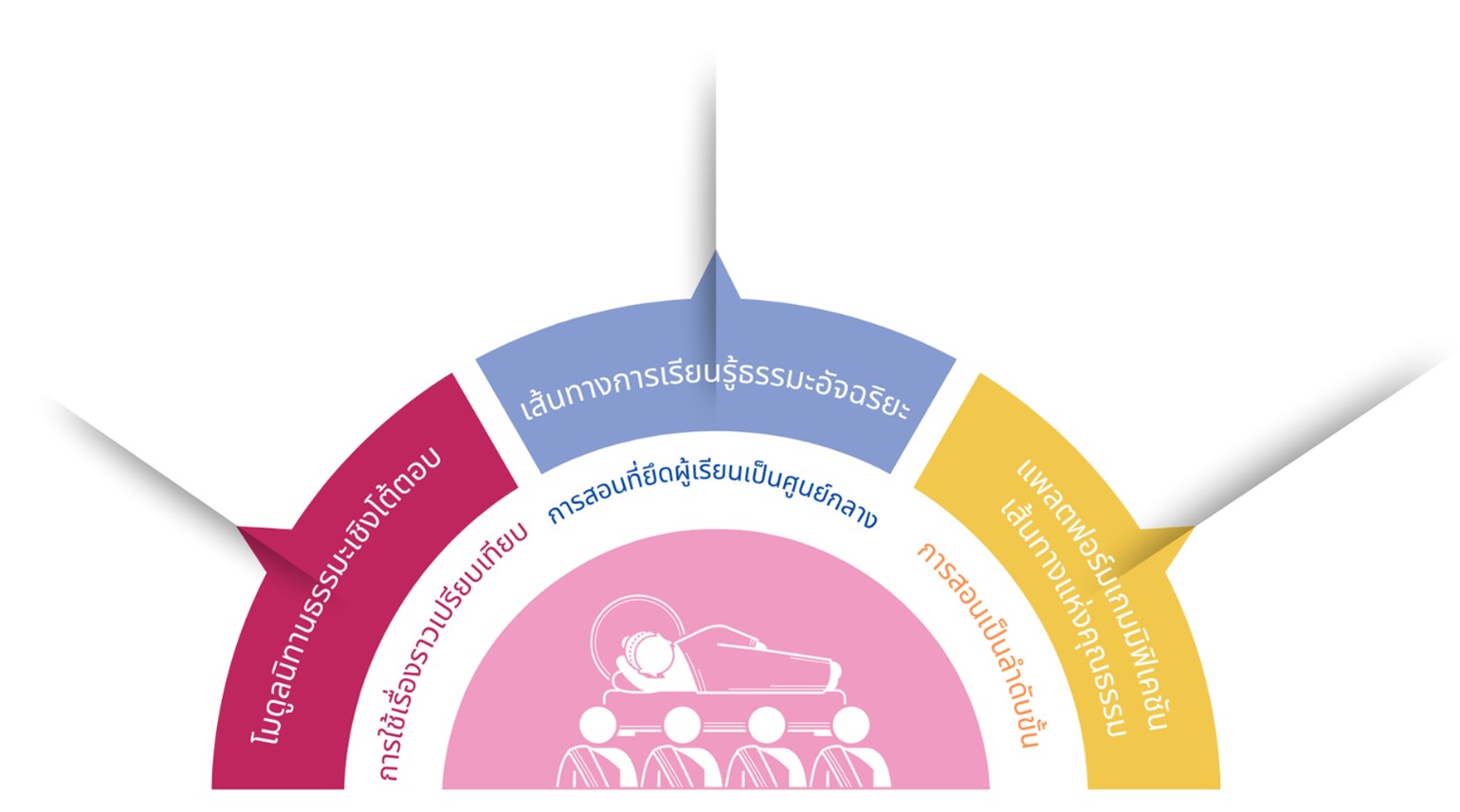
This article presents Buddhist methods for developing innovative instructional media in Buddhism for 21st-century learners. The traditional learning management, which emphasizes lectures and rote memorization, is facing a critical challenge as it fails to meet the needs of digital-age learners. This has resulted in a disconnect between students and the core principles of Dhamma, thereby failing to achieve the goal of developing learners into complete human beings as stipulated in the National Education Act. Therefore, this article aims to study and synthesize the principles of Buddhist methods, the Buddha's pedagogical processes that align with modern learning theories, to serve as a conceptual framework for designing innovative media. The study proposes three key development guidelines: 1) The use of parables and analogies (Upamā-upameyya), which focuses on creating interactive media for students to learn through simulated experiences; 2) A learner-centered approach, which utilizes Artificial Intelligence (AI) to create personalized learning paths; and 3) Progressive instruction (Anupubbikathā), which designs media in a gamified format to establish a systematic path for self-training. These Buddhist methods can shift the learning paradigm in Buddhism from passive reception to active practice, making learning engaging and relevant to the modern era. This approach ensures that Buddhism can serve as a sustainable means of cultivating wisdom and virtue for learners in the 21st century.
Article Details
References
จิระวัฒน์ โรจนศิลป์ และคณะ. (2566). รูปแบบการจัดการเรียนการสอนวิชาพระพุทธศาสนา. วารสารสังคมศาสตร์และวัฒนธรรม, 7(6), 262-271.
ชัยยงค์ พรหมวงศ์. (2556). การทดสอบประสิทธิภาพสื่อหรือชุดการสอน. วารสารศิลปากรศึกษาศาสตร์วิจัย, 5(1), 7-20.
ทิศนา แขมมณี. (2560). ศาสตร์การสอน: องค์ความรู้เพื่อการจัดกระบวนการเรียนรู้ที่มีประสิทธิภาพ. พิมพ์ครั้งที่ 21. กรุงเทพมหานคร: สำนักพิมพ์แห่งจุฬาลงกรณ์มหาวิทยาลัย.
พระพรหมคุณาภรณ์ (ป. อ. ปยุตฺโต). (2559). พจนานุกรมพุทธศาสตร์ ฉบับประมวลธรรม. พิมพ์ครั้งที่ 34. กรุงเทพมหานคร: สำนักพิมพ์ผลิธัมม์.
พุทธทาสภิกขุ. (2555). คู่มือมนุษย์. กรุงเทพมหานคร: สำนักพิมพ์สุขภาพใจ.
ไพฑูรย์ สินลารัตน์. (2558). ครูและโรงเรียนในศตวรรษที่ 21: ต้องทำอะไรและทำอย่างไร. วารสารครุศาสตร์ จุฬาลงกรณ์มหาวิทยาลัย, 43(2), 296-299.
มหาวิทยาลัยมหาจุฬาลงกรณราชวิทยาลัย. (2539). พระไตรปิฎกภาษาไทย ฉบับมหาจุฬาลงกรณราชวิทยาลัย. กรุงเทพมหานคร: โรงพิมพ์มหาจุฬาลงกรณราชวิทยาลัย.
วิจารณ์ พานิช. (2555). วิถีสร้างการเรียนรู้เพื่อศิษย์ในศตวรรษที่ 21. กรุงเทพมหานคร: มูลนิธิสดศรี-สฤษดิ์วงศ์.
วุฒิพงษ์ ภักดีเหลา. (2554). การศึกษาคุณลักษณะขององค์กรนวัตกรรม: กรณีศึกษาองค์กรที่ได้รับรางวัลด้านนวัตกรรม. วิทยานิพนธ์วิทยาศาสตรมหาบัณฑิต. สถาบันบัณฑิตพัฒนบริหารศาสตร์.
สมเด็จพระพุทธโฆษาจารย์ (ป. อ. ปยุตฺโต). (2559). พุทธธรรม (ฉบับปรับปรุงและขยายความ). กรุงเทพมหานคร: โรงพิมพ์มหาจุฬาลงกรณราชวิทยาลัย.
สิริวรรณ ศรีพหล. (2554). การจัดการเรียนรู้วิชาสังคมศึกษา. ใน เอกสารประกอบการสอนรายวิชา 472 552 สัมมนาหลักสูตรและการสอนสังคมศึกษา ภาควิชาหลักสูตรและวิธีสอนคณะศึกษาศาสตร์. มหาวิทยาลัยศิลปากร.
Jenkins, H., and others. (2009). Confronting the challenges of a participatory culture: Media education for the 21st century. The MIT Press.
Mayer, R. E. (2009). Multimedia learning. New York, NY: Cambridge University Press.
Partnership for 21st Century Skills. (2015). P21 framework for 21st century learning. P21. From http://www.p21.org/our-work/p21-framework Retrieved 19 October 2025.
Prensky, M. (2001). Digital natives, digital immigrants Part 1. On the Horizon, 9(5), 1-6.
Everett M. Rogers. (2003). Diffusion of innovations. New York, NY: Free Press.
Schumpeter, J. A. (1942). Capitalism, socialism, and democracy. New York, NY: Harper & Brothers.
