STRENGTHEN STUDENT DISCIPLINE ACCORDING TO BUDDHADHAMMA PRINCIPLES OF EDUCATIONAL INSTITUTION ADMINISTRATORS THE SECONDARY EDUCATION SERVICE AREA OFFICE ROI ET
Keywords:
Strengthen Student Discipline, Buddhadhamma, The Secondary Education Service Area Office Roi EtAbstract
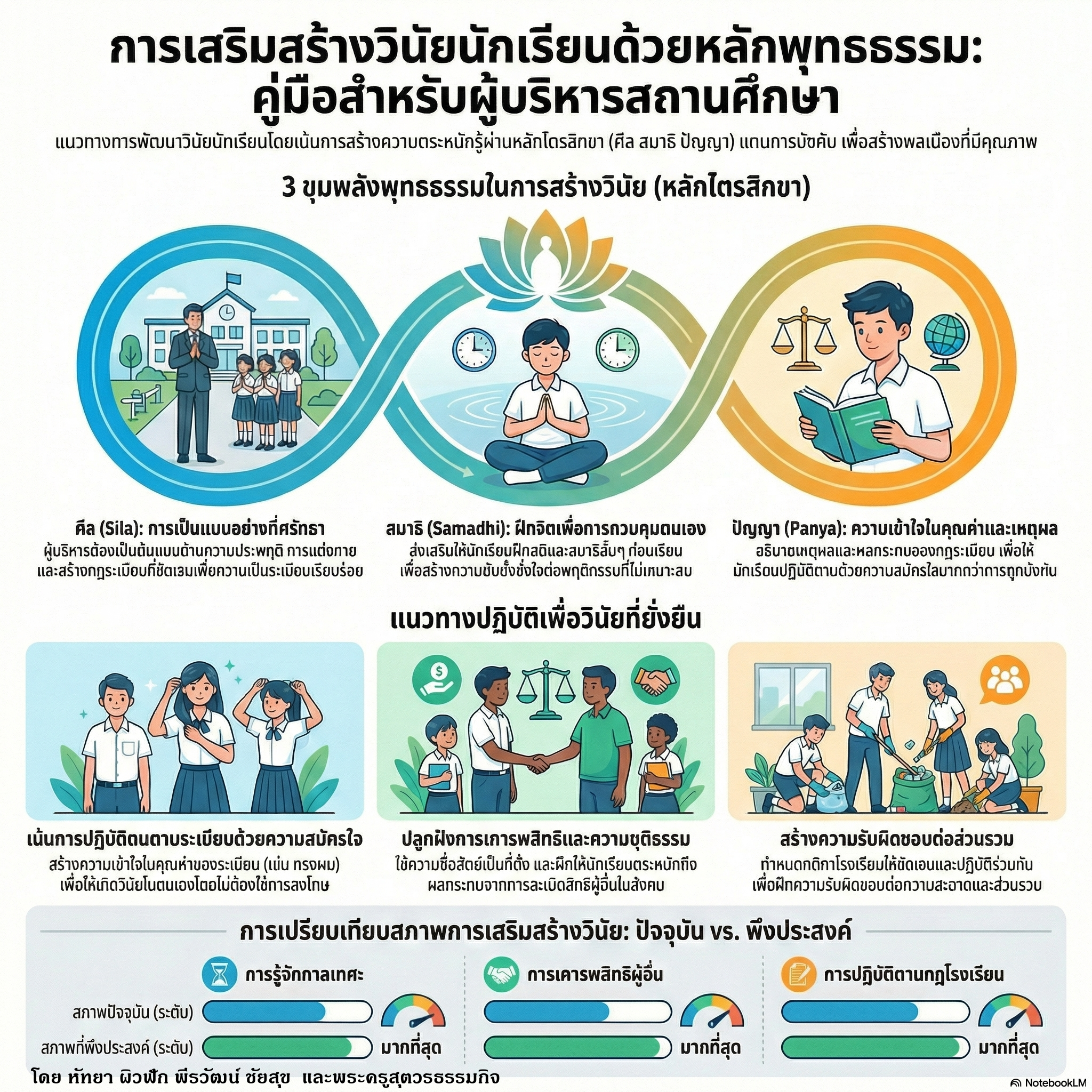
This research article aims to: 1) Study the conditions and needs of school administrators under the Office of Secondary Education Service Area Roi Et to strengthen student discipline. 2) Study the methods of strengthening student discipline according to Buddhist principles of school administrators under the Office of the Secondary Education Service Area, Roi Et and 3) Propose guidelines for strengthening discipline for students according to Buddhist principles for administrators of educational institutions under the Office of the Secondary Education Area, Roi Et. This research is a mixed-method research, namely, quantitative research using a sample of 345 people to answer the opinion questionnaire and using a sample group of 30 people to answer the assessment of suitability, feasibility and usefulness. Statistics used in data analysis included percentage, mean, standard deviation, and the values of needs that the educational institution wanted to achieve using the Priority Needs Index (PNI) method. Qualitative research analyzed the content of interviews with 9 experts using descriptive content analysis techniques. The research results found that : 1) The current condition of student discipline promotion by administrators of educational institutions under the Secondary Educational Service Area Office, Roi Et, is overall at a high level and the overall desirable condition is at the highest level. 2) How to strengthen student discipline according to Buddhist principles: Administrators should be role models in terms of behavior, create clear rules, instill honesty and respect for the rights of others. 3) The results of the proposals for guidelines to strengthen discipline for students according to Buddhist principles by educational institution administrators, based on appropriateness, feasibility, and overall benefit, were at the highest level. When considering each aspect, it was found that the appropriateness aspect had the highest average value, followed by the usefulness aspect and the feasibility aspect.
References
กนก วงษ์ตระหง่าน. (2564). ครูลาออกทนภาระงานเอกสารไม่ไหวสะท้อนระบบการศึกษาล้มเหลว. ฐานเศรษฐกิจ. https://www.thansettakij.com/politics/503355
ชลิดา จิตต์อารีย์. (2560). แนวทางการประเมินผลการปฏิบัติงานของครูตามหลักธรรมาภิบาล. วารสารศึกษาศาสตร์ มหาวิทยาลัยศิลปากร, 3(1), 1–10.
นวรัตน์ สถาพรพานิช. (2564). แนวทางการสร้างวินัยตามหลักพุทธบริหารการศึกษาสำหรับนักเรียนประถมศึกษาโรงเรียน สังกัดสำนักงานเขตพื้นที่การศึกษาประถมศึกษานนทบุรี เขต 1 [วิทยานิพนธ์ปริญญามหาบัณฑิต, มหาวิทยาลัยมหาจุฬาลงกรณราชวิทยาลัย].
บุญชม ศรีสะอาด. (2560). การวิจัยเบื้องต้น (พิมพ์ครั้งที่ 10). สุวีริยาสาส์น.
ประกอบ กรรณสูตร. (2542). สถิติเพื่อการวิจัยทางพฤติกรรมศาสตร์ (พิมพ์ครั้งที่ 3). ด่านสุทธาการพิมพ์.
ปิยธิดา ศรีจินดา. (2556). ปัจจัยที่มีความสัมพันธ์กับการประพฤติผิดกฎระเบียบของนักเรียน ระดับมัธยมศึกษาตอนปลาย. วารสารวิทยบริการ มหาวิทยาลัยสงขลานครินทร์, 24(4), 1–17.
ศุภวรณ ทองลาด. (2564). การพัฒนาแนวทางการเสริมสร้างวินัยในตนเองของนักเรียน สังกัดสำนักงานเขตพื้นที่การศึกษาประถมศึกษากาฬสินธุ์ เขต 3 [วิทยานิพนธ์ปริญญามหาบัณฑิต, มหาวิทยาลัยมหาสารคาม]. (หมายเหตุ: หากต้นฉบับคือ ศุภวรรณ ให้เติม ร ลงไปด้วยครับ)
สำนักงานคณะกรรมการการศึกษาขั้นพื้นฐาน. (2546). คู่มือการปฏิบัติงานสำหรับผู้บริหารโรงเรียน. โรงพิมพ์คุรุสภาลาดพร้าว.
สิริกร สินสม. (2548). ปัจจัยที่มีผลต่อความมีวินัยในตนเองของนักเรียนระดับมัธยมศึกษาตอนต้น โรงเรียนมัธยมศึกษาจังหวัดนนทบุรี สังกัดสำนักงานเขตพื้นที่การศึกษามัธยมศึกษา เขต 3 [วิทยานิพนธ์ปริญญามหาบัณฑิต, มหาวิทยาลัยธุรกิจบัณฑิตย์].
สุภัทรา บุญแสง. (2561). การบริหารงานโดยใช้การเป็นแบบอย่างของผู้บริหารสถานศึกษาในสังกัดสำนักงานเขตพื้นที่การศึกษาประถมศึกษาเชียงราย เขต 2 [วิทยานิพนธ์ปริญญามหาบัณฑิต, มหาวิทยาลัยราชภัฏเชียงราย].
สุวิมล ว่องวาณิช. (2558). การวิจัยประเมินความต้องการจำเป็น (พิมพ์ครั้งที่ 3 ฉบับปรับปรุง). สำนักพิมพ์จุฬาลงกรณ์มหาวิทยาลัย.
Yamane, T. (1973). Statistics: An introductory analysis (3rd ed.). Harper & Row.
Downloads
Published
How to Cite
Issue
Section
Categories
License
Copyright (c) 2026 Faculty of Education, Srinakharinwirot university

This work is licensed under a Creative Commons Attribution-NonCommercial-NoDerivatives 4.0 International License.


