THE DEVELOPMENT OF BUDDHIST CREATIVE THINKING INDICATORS FOR SCHOOL ADMINISTRATORS IN THE DIGITAL ERA
Article Sidebar
Main Article Content
Abstract
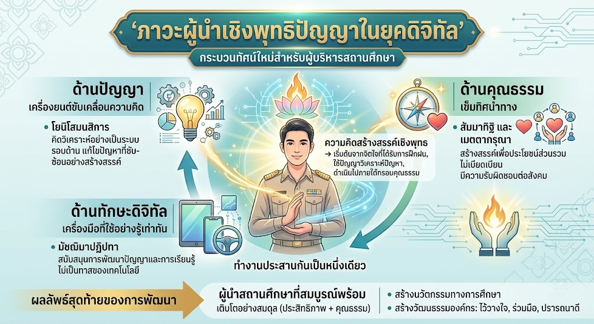
This article aims to develop indicators of Buddhist creative thinking for educational administrators in the digital age. The study employs a documentary synthesis method integrating three core conceptual frameworks 1) concepts and theories of creativity in the digital era, emphasizing innovative thinking to navigate the Volatile Uncertain Complex, and Ambiguous 2) Buddhist principles related to creativity including analytical thinking 4 the four paths to success and right view as a moral compass and 3) the roles and competencies of 21st-century school administrators, which have shifted from managerial roles to those of learning leaders. The synthesis resulted in a framework of Buddhist creative thinking indicators for educational administrators in the digital age comprising three main dimensions 1) Wisdom which includes root cause analytical thinking mindful and equanimous problem-solving, and integrative and reflective thinking 2) Morality which encompasses compassion-based creativity ethical responsibility for innovation and transparent and collaborative operation and 3) Digital Skills which consist of using technology for wisdom development, Buddhist digital literacy and media mindfulness, and balanced and moderate technology integration. This developed framework can serve as a guideline for assessing and enhancing the potential of school administrators to become Wisdom-Based Leaders who balance efficiency with morality, enabling them to lead their organizations sustainably in the digital age. It is also beneficial for policy-level agencies in establishing competency standards for administrators.
Article Details
References
เกรียงศักดิ์ เจริญวงศ์ศักดิ์. (2559). สุดยอดแนวคิดเพื่อการคิดสร้างสรรค์. กรุงเทพมหานคร: ซัคเซส มีเดีย.
ทิศนา แขมมณี. (2561). ศาสตร์การสอน: องค์ความรู้เพื่อการจัดกระบวนการเรียนรู้ที่มีประสิทธิภาพ. พิมพ์ครั้งที่ 22. กรุงเทพมหานคร: สำนักพิมพ์แห่งจุฬาลงกรณ์มหาวิทยาลัย.
ไพฑูรย์ สินลารัตน์. (2560). การศึกษา 4.0 เป็นยิ่งกว่าการศึกษา. กรุงเทพมหานคร: สำนักพิมพ์แห่งจุฬาลงกรณ์มหาวิทยาลัย.
พระธรรมปิฎก (ป. อ. ปยุตฺโต). (2546). วิธีคิดตามหลักพุทธธรรม. กรุงเทพมหานคร: สำนักพิมพ์มูลนิธิพุทธธรรม.
พระพรหมคุณาภรณ์ (ป. อ. ปยุตฺโต). (2559). พจนานุกรมพุทธศาสตร์ ฉบับประมวลธรรม. กรุงเทพมหานคร: โรงพิมพ์สหธรรมิก.
ว.วชิรเมธี (พระมหาวุฒิชัย วชิรเมธี). (2555). อิทธิบาท 4 หลักธรรมสู่ความสำเร็จ. กรุงเทพมหานคร: ปราณ พับลิชชิ่ง.
วิจารณ์ พานิช. (2556). การสร้างการเรียนรู้สู่ศตวรรษที่ 21. กรุงเทพมหานคร: มูลนิธิสยามกัมมาจล.
วิชัย วงษ์ใหญ่ และมารุต พัฒผล. (2562). การบริหารจัดการสถานศึกษาในยุคดิจิทัล. กรุงเทพมหานคร: ศูนย์ผู้นำนวัตกรรมหลักสูตรและการเรียนรู้.
สมเด็จพระพุทธโฆษาจารย์ (ประยุทธ์ ปยุตฺโต). (2564). พุทธธรรม ฉบับปรับขยาย. กรุงเทพมหานคร: โรงพิมพ์มหาจุฬาลงกรณราชวิทยาลัย.
สมพงษ์ จิตระดับ. (2560). การปฏิรูปการศึกษาไทย: จากวิกฤตสู่โอกาส. วารสารศึกษาศาสตร์ มหาวิทยาลัยนเรศวร, 19(2), 301-312.
สุขุม เฉลยทรัพย์. (2561). ภาวะผู้นำเชิงสร้างสรรค์ของผู้บริหารสถานศึกษา. วารสารครุศาสตร์ จุฬาลงกรณ์มหาวิทยาลัย, 46(4), 1-18.
สำนักงานเลขาธิการสภาการศึกษา. (2562). รายงานการศึกษาไทย พ.ศ. 2562: สมรรถนะและทักษะที่จำเป็นในโลกอนาคต. กรุงเทพมหานคร: พริกหวานกราฟฟิค.
อรรถพล อนันตวรสกุล. (2564). ครูสร้างสรรค์ในห้องเรียนกลับด้านในการศึกษาสร้างคนที่สร้างสรรค์นวัตกรรม. กรุงเทพมหานคร: สำนักงานเลขาธิการสภาการศึกษา.
