แนวทางการบริหารงบประมาณของสถานศึกษาในสังกัดองค์กรปกครองส่วนท้องถิ่นด้วยหลักสัปปุริสธรรม 7
Article Sidebar
Main Article Content
บทคัดย่อ
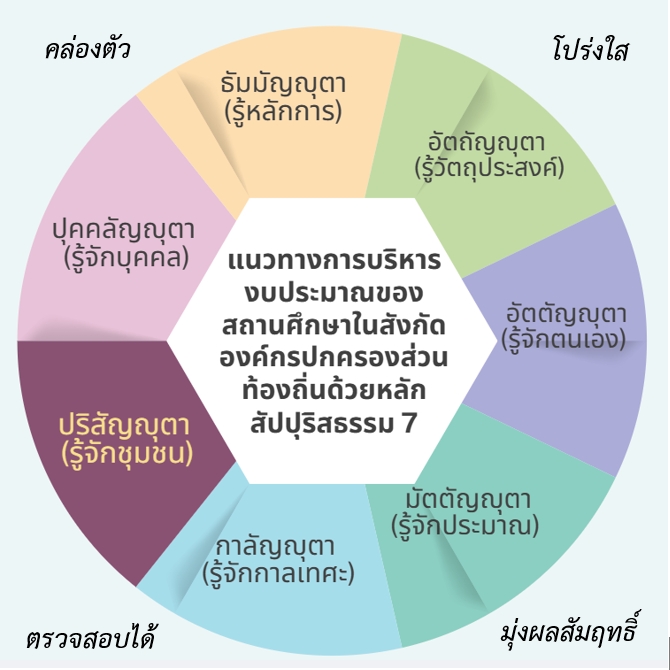
สถานศึกษาเป็นองค์กรทางการศึกษาที่มีวัตถุประสงค์หลักเพื่อผลิตนักเรียน นักศึกษาให้มีคุณภาพตามจุดมุ่งหมายของหลักสูตรการศึกษาขั้นพื้นฐาน พุทธศักราช 2544 ที่มุ่งพัฒนาคนไทยให้เป็นมนุษย์ที่มีความสมบูรณ์ทั้งร่างกายและจิตใจ เป็นคนดี มีปัญญา มีความสุข และมีความเป็นไทย มีศักยภาพในการศึกษาต่อและประกอบอาชีพ โดยอาศัยทรัพยากรที่สถานศึกษามีอยู่หรือจัดหาเพิ่มเติมตามศักยภาพและบริบทของสถานศึกษานั้น ๆ วัตถุประสงค์หลักต้องการนำเสนอ ความหมาย หลักการ แนวคิดทฤษฎี องค์ประกอบงานวิจัยที่เกี่ยวข้องตลอดจนการบูรณาการมาใช้กับสถานศึกษาสังกัดองค์กรปกครองส่วนท้องถิ่น สรุปเป็นองค์ข้อความรู้ใหม่ที่เกิดจากการศึกษาค้นคว้าเพื่อนำไปปรับใช้ โดยผู้ศึกษาได้ให้ความสนใจศึกษาในประเด็นการบริหารงานงบประมาณของสถานศึกษาสังกัดองค์กรปกครองส่วนท้องถิ่นที่มีความใกล้ชิดและเป็นการสร้างรากฐานทางการศึกษาไทยให้มีความเข้มแข็งและยั่งยืน มุ่งเน้นความเป็นอิสระ ในการบริหารจัดการมีความคล่องตัว โปร่งใส ตรวจสอบได้ ยึดหลักการบริหารมุ่งเน้นผลสัมฤทธิ์ บริหารงบประมาณแบบมุ่งเน้นผลงานและนำหลักธรรมสัปปุริสธรรมอันประกอบด้วย ธัมมัญญุตา (รู้หลักการ) อัตถัญญุตา (รู้วัตถุประสงค์) อัตตัญญุตา (รู้จักตนเอง) มัตตัญญุตา (รู้จักประมาณ) กาลัญญุตา (รู้จักกาลเทศะ) ปริสัญญุตา (รู้จักชุมชน) และ ปุคคลัญญุตา (รู้จักบุคคล) มาปรับใช้เป็นแนวทางการบริหารงานงบประมาณของผู้นำ และนำมาเป็นแนวทางในการจัดทำและเสนอของบประมาณ การจัดสรรงบประมาณ การตรวจสอบ ติดตาม ประเมินผล และรายงานผลการใช้เงินและผลการดำเนินงาน การระดมทรัพยากรและการลงทุนเพื่อการศึกษาการบริหารการเงิน การบริหารบัญชี การบริหารพัสดุ และสินทรัพย์ มีการจัดหาผลประโยชน์จากทรัพย์สินของสถานศึกษา รวมทั้งจัดหารายได้จากงานบริการมาใช้บริหารจัดการในสถานศึกษา เพื่อเป็นประโยชน์ทางการศึกษา และส่งผลให้เกิดคุณภาพที่ดีต่อผู้เรียนเป็นสำคัญ
Article Details
เอกสารอ้างอิง
กระทรวงศึกษาธิการ. (2542). พระราชบัญญัติการศึกษาแห่งชาติ พ.ศ. 2542 และที่แก้ไขเพิ่มเติม (ฉบับที่ 2) พ.ศ. 2545. กรุงเทพมหานคร: โรงพิมพ์คุรุสภาลาดพร้าว.
กระทรวงศึกษาธิการ. (2546). คู่มือการบริหารสถานศึกษาขั้นพื้นฐานที่เป็นนิติบุคคล. กรุงเทพมหานคร: กระทรวงฯ.
กลุ่มนิเทศติดตามและประเมินผลการจัดการศึกษา สำนักงานเขตพื้นที่การศึกษาประถมศึกษาพิจิตร เขต 1. (2563). การจัดกลุ่มคุณภาพของโรงเรียนจากคะแนนค่าเฉลี่ยของผลการทดสอบการศึกษาระดับชาติ หรือ (O-NET) ชั้นประถมศึกษาปีที่ 6 และชั้นมัธยมศึกษาปีที่ 3 ปีการศึกษา 2/2562. หนังสือที่ ศธ 04099/ว1785, วันที่ 15 มิถุนายน 2563.
จริยะดา จันทรังษี. (2558). เอกสารประกอบการบรรยาย เรื่อง การจัดทำงบประมาณ. (ม.ป.ท.)
ชัยสิทธิ์ เฉลิมมีประเสริฐ. (2546). ความพร้อมของหน่วยงานภาครัฐในการบริหารจัดการระบบงบประมาณแบบมุ่งเน้นผลงานตามยุทธศาสตร์ชาติและกรณีตัวอย่างของกรมควบคุมโรค กระทรวงสาธารณสุข. พิมพ์ครั้งที่ 2. กรุงเทพมหานคร: ธนัชชการพิมพ์.
เนตรพัณณา ยาวิราช. (2546). การจัดการสมัยใหม่. กรุงเทพมหานคร: เซ็นทรัลเอ็กเพรส.
ปัญญา ฉายะจินดาวงศ์ และรัชนี ภู่ตระกูล. (2544). ธรรมาภิบาลกับสังคมไทย. วารสารนักบริหาร, 21(2), 28-32.
พระพรหมคุณาภรณ์ (ป. อ. ปยุตฺโต). (2546). ภาวะผู้นำ ความสำคัญต่อการพัฒนาคน: พัฒนาประเทศ. กรุงเทพมหานคร: ธรรมสภา.
พูลทรัพย์ ปียะอมันต์. (2544). การเตรียมความพร้อมขององค์การบริหารส่วนจังหวัดในการพัฒนาท้องถิ่นตามนโยบายการกระจายอำนาจ. นิตยสารท้องถิ่น, 41(6), 39-47.
พิมพ์พา พึ่งบุญพานิชย์. (2544). งบประมาณระบบใหม่กับการวางแผนและควบคุม. มหาวิทยาลัยคริสเตียน, 7(2), 19-24.
ภิญโญ สาธร. (2552). หลักการบริหารโรงเรียน. พิมพ์ครั้งที่ 9. กรุงเทพมหานคร: จุฬาลงกรณ์มหาวิทยาลัย.
มหาจุฬาลงกรณราชวิทยาลัย. (2539). พระไตรปิฎกภาษาไทย ฉบับมหาจุฬาลงกรณราชวิทยาลัย. กรุงเทพมหานคร: โรงพิมพ์มหาจุฬาลงกรณราชวิทยาลัย.
มหาวิทยาลัยสุโขทัยธรรมาธิราช. (2549). การจัดการทรัพยากรการท่องเที่ยว หน่วยที่ 9-15. พิมพ์ครั้งที่ 2. นนทบุรี: สำนักพิมพ์มหาวิทยาลัยสุโขทัยธรรมาธิราช.
มานพ พราหมณโชติ และคณะ (2545). หลักการบริหารงบประมาณและการเงินโรงเรียน. กรุงเทพมหานคร: มหาวิทยาลัยรามคำแหง.
วรนุช สาเกผล. (2560). ความคุ้มค่าในการใช้จ่ายงบประมาณแผ่นดิน. แหล่งที่มา http://www.nidtep.go.th/2017/ publish/doc/20210906-1.pdf สืบค้นเมื่อ 2 มกราคม 2568.
สมเด็จพระอริยวงศาคตญาณ สมเด็จพระสังฆราช (อัฏฺฐายี). (2509). “สัปปุริสธรรม” หนังสืออนุสรณ์เนื่องในโอกาสงานฌาปนกิจศพ นายชัย. กรุงเทพมหานคร: ม.ท.ป.
เสาวนิตย์ ชัยมุสิก. (2545). การจัดทำแผนยุทธศาสตร์ระดับสถานศึกษา. กรุงเทพมหานคร: บุ๊คพอยท์.
สนธิรัตน์ อุ่นใจ. (2547). การศึกษาแนวทางการวางแผนงบประมาณแบบมุ่งเน้นผลงานในโรงเรียนประถมศึกษาสังกัดสำนักงานเขตพื้นที่การศึกษาพระนครศรีอยุธยา เขต 1 และเขต 2. วิทยานิพนธ์ครุศาสตร์มหาบัณฑิต. พระนครศรีอยุธยา. มหาวิทยาลัยราชภัฏพระนครศรีอยุธยา.
สำนักงบประมาณ. (2562). ระเบียบว่าการบริหารงบประมาณ พ.ศ. 2562. กรุงเทพมหานคร: สำนักงบประมาณ
อมรา รัตตากร และคณะ. (2545). รายงานการวิจัยการจัดการงบประมาณแบบมุ่งเน้นผลงานของสถาบันราชภัฏจันทรเกษม: สภาพปัญหา/อุปสรรคและข้อเสนอแนะ. กรุงเทพมหานคร: สถาบันราชภัฏจันทรเกษม.
อํานวย ทองโปร่ง และศิริพงษ์ เศาภายน. (2547). หลักการบริหารงบประมาณและการเงินโรงเรียน. กรุงเทพมหานคร: ข้าวฟ่าง.
