DEVELOPMENT OF A SCIENCE LEARNING MODEL USING PHENOMENON BASE LEARNING TO ENHANCE ANALYTICAL THINKING AND CREATIVE PROBLEM SOLVING SKILLS FOR GRADE 8 STUDENTS
Keywords:
development of a science learning, phenomenon-based learning, analytical thinking skills, creative problem solving skillsAbstract
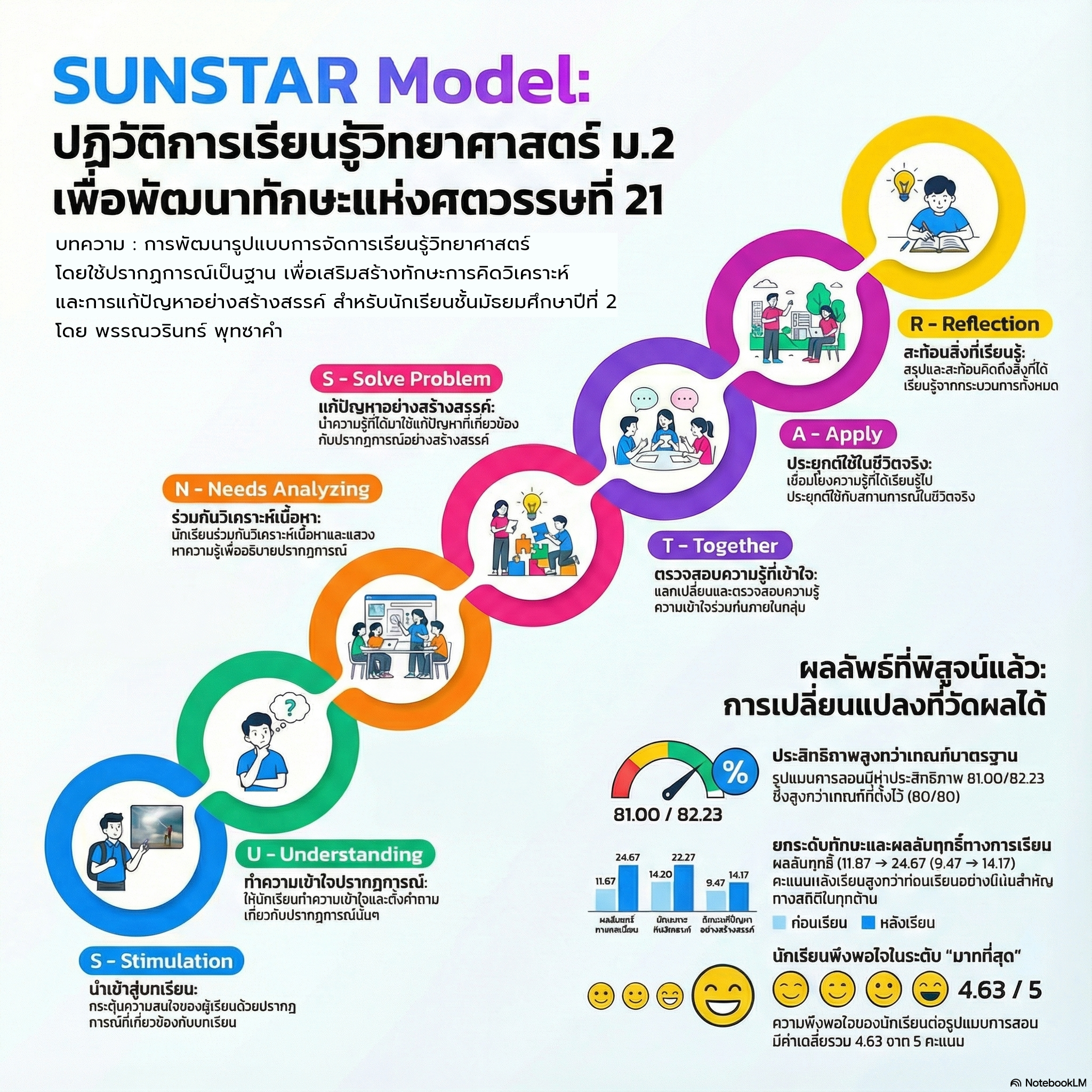
This research aimed to 1) study basic information for developing a learning model, 2) create and verify the quality of the learning model to be effective according to the 80/80 criteria, 3) study the results of the trial use of the learning model, and 4) evaluate the use of the learning model. The research was conducted with a research and development process. The sample consisted of 40 grade 8 students at Chokchai Samakkhi School, second semester, academic year 2023, obtained by cluster random sampling. The research results showed that 1) The study of baseline data for developing a learning model revealed that the teaching of science to grade 8 students primarily utilized Active Learning methods, employing questions to stimulate interest and a lecture-based approach before students conducted experiments and assigned worksheets within a set time limit. Although teachers incorporated group learning activities, they lacked effective learning support resources and a well-designed learning process to develop analytical thinking and creative problem-solving skills. 2) The creation and quality control of the learning management model showed that: The active science learning model using phenomenon base learning to enhance analytical thinking and creative problem solving skills, it is called “SUNSTAR Model”.There are 7 steps in the learning process: Step 1: Stimulation, Step 2: Understanding, Step 3: Needs Analyzing, Step 4: Solve Problem, Step 5: Together, Step 6: Apply, Step 7: Reflection. The evaluation of the suitability of the learning management model, based on expert opinions, showed overall suitability at the highest level, with an effectiveness value of 81.00/82.23, meeting the established criteria of 80/80. 3) The results of the pilot test of the learning model showed that: The science achievement of Grade 8 students learning with the SUNSTAR Model was significantly higher after the intervention than before, at a statistical significance level of 0.5. Furthermore, the analytical thinking and creative problem-solving skills of Grade 8 students learning with the SUNSTAR Model were significantly higher after the intervention than before, at a statistical significance level of .05. 4) The evaluation of the learning model showed that: Students were satisfied with learning using the phenomenon based science learning model to enhance analytical thinking and creative problem solving skills, overall, was at the highest level.
References
กระทรวงศึกษาธิการ. (2560). หลักสูตรแกนกลางการศึกษาขั้นพื้นฐาน พุทธศักราช 2551 (ปรับปรุง 2560). กรุงเทพฯ: โรงพิมพ์คุรุสภาลาดพร้าว.
จิรันธนิน คงจีน และวารีรัตน์ แก้วอุไร. (2562). การพัฒนารูปแบบการจัดการเรียนรู้วิทยาศาสตร์ตามแนวการเรียนรู้อย่างกระตือรือร้นและการช่วยเสริมศักยภาพ เพื่อส่งเสริมความสามารถในการแก้ปัญหาอย่างมีวิจารณญาณสำหรับนักเรียนชั้นมัธยมศึกษาตอนปลาย. วารสารศึกษาศาสตร์ มหาวิทยาลัยนเรศวร, 21(1), 16–29.
ทิศนา แขมมณี. (2560). ศาสตร์การสอน: องค์ความรู้เพื่อการจัดกระบวนการเรียนรู้ที่มีประสิทธิภาพ. กรุงเทพฯ: สำนักพิมพ์แห่งจุฬาลงกรณ์มหาวิทยาลัย.
พณิดา เตชะผล, กรวี นันทชาด, และสมสงวน ปัสสาโก. (2564). การพัฒนากิจกรรมการเรียนรู้โดยการประยุกต์ใช้การสืบเสาะหาความรู้ร่วมกับปรากฏการณ์เป็นฐานที่ส่งเสริมความสามารถในการคิดวิเคราะห์และเจตคติต่อการเรียนวิทยาศาสตร์ของนักเรียนชั้นมัธยมศึกษาปีที่ 2. วารสารคุรุศึกษา มหาวิทยาลัยราชภัฏอุดรธานี, 3(1), 19–36.
ยุพาพันธ์ มินวงษ์. (2558). การพัฒนารูปแบบการเรียนการสอนโครงงานวิทยาศาสตร์ที่เน้นการแก้ปัญหาอย่างสร้างสรรค์ (3P) ของนักเรียนชั้นมัธยมศึกษาปีที่ 2. วารสารศึกษาศาสตร์, 26(1), 210–233.
วิจารณ์ พานิช. (2555). วิถีสร้างการเรียนรู้เพื่อศิษย์ในศตวรรษที่ 21. กรุงเทพฯ: มูลนิธิสดศรี-สฤษดิ์วงศ์.
วีรยุทธ พลายเล็ก. (2563). การพัฒนารูปแบบการเรียนการสอนตามแนวคิด Active Learning เพื่อเสริมสร้างทักษะและกระบวนการและจิตคณิตศาสตร์สำหรับนักเรียนชั้นประถมศึกษา (วิทยานิพนธ์ปริญญาดุษฎีบัณฑิต). มหาวิทยาลัยศิลปากร.
ศรีผกา เจริญยศ, มาเรียม นิลพันธุ์, และมารุต พัฒผล. (2563). การพัฒนารูปแบบการจัดการเรียนรู้ตามแนว Active Learning เพื่อเสริมสร้างมโนทัศน์การเรียนรู้เคมีและทักษะการคิดอย่างมีวิจารณญาณของนักเรียนชั้นมัธยมศึกษาตอนปลาย. วารสารสุทธิปริทัศน์, 34(109), 46–57.
สุชานันท์ วรวัฒนานนท์. (2565). การจัดการเรียนรู้แบบปรากฏการณ์เป็นฐาน เพื่อพัฒนาทักษะการคิดอย่างมีวิจารณญาณและการแก้ปัญหา เรื่อง ปรากฏการณ์ของโลกและภัยธรรมชาติของนักเรียนชั้นประถมศึกษาปีที่ 6 (การค้นคว้าอิสระปริญญามหาบัณฑิต). มหาวิทยาลัยนเรศวร.
สุพรรษา ขันสัมฤทธิ. (2565). การพัฒนาความสามารถในการแก้ปัญหาอย่างสร้างสรรค์ของนักเรียนชั้นมัธยมศึกษาปีที่ 1 ห้องเรียนพิเศษวิทยาศาสตร์-คณิตศาสตร์ด้วยการจัดการเรียนรู้โดยใช้ปัญหาเป็นฐาน (ปริญญานิพนธ์มหาบัณฑิต). มหาวิทยาลัยศรีนครินทรวิโรฒ.
หัสวนัส เพ็งสันเทียะ, มนตา ตุลย์เมธาการ, และอิทธิพัทธ์ สุวทันพรกูล. (2564). ผลการจัดการเรียนรู้โดยใช้ปรากฏการณ์เป็นฐานที่มีต่อการคิดอย่างมีวิจารณญาณและการคิดสร้างสรรค์ของนักเรียนชั้นมัธยมศึกษาปีที่ 6. วารสารศิลปากรศึกษาศาสตร์วิจัย, 13(2), 240–257.
อรพรรณ บุตรกตัญญู. (2561). การเรียนรู้โดยใช้ปรากฎการณ์เป็นฐานเพื่อการสร้างแบบองค์รวมและการเข้าถึงโลกแห่งความจริงของผู้เรียน. วารสารครุศาสตร์ จุฬาลงกรณ์มหาวิทยาลัย, 46(2), 348–365.
Beyer, B. K. (1985). Critical thinking: What is it. Social Education, 49(4), 270–276.
Daehler, K., & Folsom, J. (2020). Making sense of SCIENCE: Phenomena-based learning. Retrieved from http://www.WestEd.org/mss
Joyce, B., & Weil, M. (2000). Model of teaching (6th ed.). New Jersey: Prentice Hall.
Treffinger, D. J., Selby, E. C., & Schoonover, P. F. (2021). Creative problem solving (CPS Version 6.1TM): A contemporary framework for managing change. Sarasota, FL: Center for Creative Learning and Creative Problem Solving Group.
Downloads
Published
How to Cite
Issue
Section
Categories
License
Copyright (c) 2025 Faculty of Education, Srinakharinwirot university

This work is licensed under a Creative Commons Attribution-NonCommercial-NoDerivatives 4.0 International License.


