ผลการจัดกิจกรรมการเล่นอิสระร่วมกับการเล่านิทานเพื่อส่งเสริมทักษะสำหรับโลกบานีของเด็กปฐมวัย
คำสำคัญ:
การเล่นอิสระ, การเล่านิทาน, ทักษะโลกบานี, เด็กปฐมวัยบทคัดย่อ
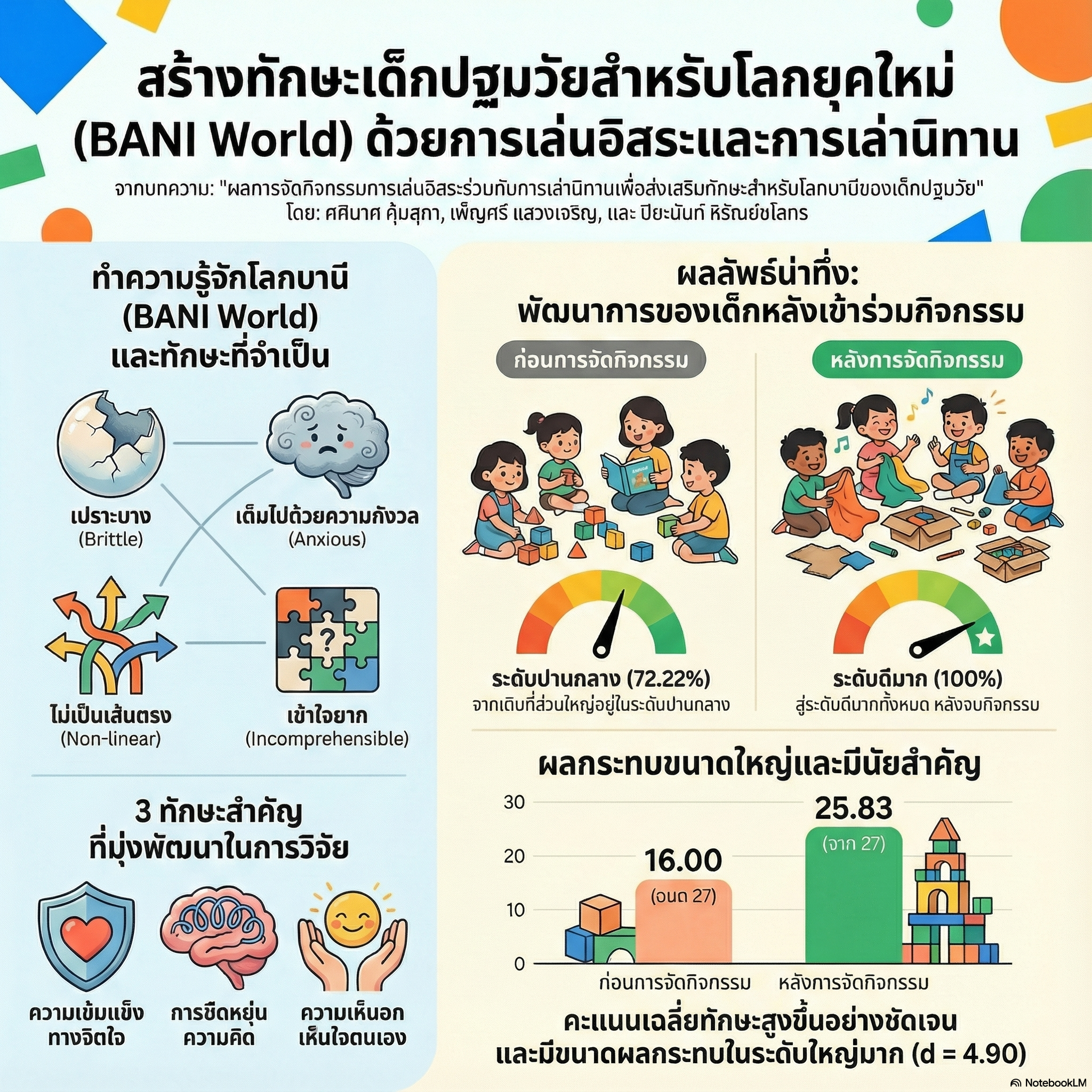
“โลกบานี” เป็นคำศัพท์ที่ถูกนิยามขึ้นเพื่อสะท้อนสภาพสังคมของโลกยุคใหม่หลังจากการระบาดของโรคโควิด-19 ซึ่งเป็นสภาพสังคมที่เต็มไปด้วยความเปราะบาง ผู้คนมีความกังวล ความสัมพันธ์ไม่เป็นเส้นตรงยากที่จะคาดเดา และเข้าใจได้ยาก การดำรงชีวิตในโลกบานีจึงจำเป็นต้องมีทักษะเฉพาะประกอบด้วย ความเข้มแข็งทางจิตใจ ความเห็นอกเห็นใจและความมีสติ ความสามารถในการยืดหยุ่นหรือพลิกแพลง และการสร้างความโปร่งใสและสัญชาตญาณ ซึ่งบางทักษะสามารถฝึกและส่งเสริมได้ตั้งแต่ในระดับปฐมวัยโดยจัดกิจกรรมที่เหมาะสม การศึกษาครั้งนี้มีวัตถุประสงค์เพื่อ 1) ศึกษาผลการจัดกิจกรรมการเล่นอิสระร่วมกับการเล่านิทานเพื่อส่งเสริมทักษะโลกบานีของเด็กปฐมวัย 2) เปรียบเทียบทักษะโลกบานีของเด็กปฐมวัยก่อนและหลังการจัดกิจกรรมการเล่นอิสระร่วมกับการเล่านิทาน กลุ่มตัวอย่าง คือ เด็กปฐมวัยอายุ 4-5 ปี ชั้นอนุบาลปีที่ 2 ภาคเรียนที่ 2 ปีการศึกษา 2567 โรงเรียนอนุบาลกุ๊กไก่ กรุงเทพมหานคร จำนวน 18 คน ทำการทดลอง 8 สัปดาห์ สัปดาห์ละ 3 วัน วันละ 45 นาทีในกิจกรรมเสรี เครื่องมือวิจัย ได้แก่ แผนการจัดประสบการณ์การเล่นอิสระร่วมกับการเล่านิทานเพื่อส่งเสริมทักษะโลกบานีของเด็กปฐมวัย และแบบประเมินทักษะโลกบานีของเด็กปฐมวัย วิเคราะห์ข้อมูลโดยใช้ค่าเฉลี่ย ส่วนเบี่ยงเบนมาตรฐาน ค่าร้อยละ การทดสอบทีสำหรับกลุ่มตัวอย่างที่ไม่เป็นอิสระจากกัน ค่าขนาดผลกระทบ และการวิเคราะห์เนื้อหา ผลการวิจัยพบว่าก่อนการทดลองเด็กปฐมวัยส่วนใหญ่มีทักษะโลกบานีระดับปานกลางคิดเป็นร้อยละ 72.22 รองลงมาคือระดับน้อยคิดเป็นร้อยละ 22.22 และระดับน้อยมากคิดเป็นร้อยละ 5.56 หลังการทดลองเด็กปฐมวัยมีทักษะโลกบานีระดับดีมากคิดเป็นร้อยละ 100.00 ทักษะโลกบานีของเด็กปฐมวัยก่อนการทดลองมีค่าเฉลี่ย 16.00 ค่าเบี่ยงเบนมาตรฐาน 2.66 และหลังการทดลองมีค่าเฉลี่ย 25.83 ค่าเบี่ยงเบนมาตรฐาน 1.65 เมื่อเปรียบเทียบความแตกต่างของคะแนนทักษะโลกบานีของเด็กปฐมวัย พบว่าคะแนนทักษะโลกบานีของเด็กปฐมวัยหลังการทดลองสูงขึ้นอย่างมีนัยสำคัญทางสถิติที่ระดับ .05 หาขนาดผลกระทบโดยใช้ดัชนี Cohen’s d พบว่าขนาดผลกระทบมีขนาดใหญ่ (d = 4.90) ผลการวิเคราะห์เนื้อหาพบว่าหลังการทดลองเด็กแสดงพฤติกรรมของทักษะโลกบานีทั้ง 3 ด้าน คือ ความเข้มแข็งทางจิตใจ การคิดยืดหยุ่น และความเห็นอกเห็นใจตนเอง มีเด็กส่วนน้อยที่มีการพัฒนาทักษะดีขึ้น แต่ยังต้องการการฝึกเพิ่มเติมบางด้าน
เอกสารอ้างอิง
กมล โพธิเย็น. (2564). Active learning: การจัดการเรียนรู้ที่ตอบโจทย์การจัดการศึกษาในศตวรรษที่ 21. วารสารศึกษาศาสตร์ มหาวิทยาลัยศิลปากร, 19(1), 11–28.
กรรณภรณ์ รุ่งแจ้ง. (2567). VUCA สู่ BANI: ความท้าทายของการจัดการศึกษาปฐมวัย. วารสารสถาบันวิจัยและพัฒนา, 9(1), 282-291.
จารุวรรณ จันจินดา. (2562). ผลการจัดกิจกรรมการเล่านิทานที่มีผลต่อความสามารถในการลงความเห็นข้อมูลของเด็กปฐมวัย โรงเรียนวัดพุมเรียง จังหวัดสุราษฎร์ธานี (วิทยานิพนธ์ปริญญามหาบัณฑิต). กรุงเทพฯ: มหาวิทยาลัยสุโขทัยธรรมาธิราช.
ดิลฉัตร ซุสสุโพวา. (2565). ผลกระทบสำคัญ 5 ด้าน ของโรคโควิด-19 ที่มีต่อเด็กในประเทศไทย. สืบค้นจาก https://www.unicef.org/thailand/th/stories/
ธิดา พิทักษ์สินสุข. (2562). EF กับการเล่นอิสระ (Free Play). ใน สุภาวดี หาญเมธี, ธิดา พิทักษ์สินสุข, และ ภาวนา อร่ามฤทธิ์ (บ.ก.), คู่มือพัฒนาทักษะสมอง EF Executive Functions สำหรับครูปฐมวัย (พิมพ์ครั้งที่ 4, น. 191-197). กรุงเทพฯ: มติชน.
ยูนิเซฟ. (ม.ป.ป.). ผลกระทบของโควิด-19 ต่อครอบครัวเปราะบาง: ครอบครัวที่มีเด็กเล็ก. สืบค้นจาก https://www.unicef.org/thailand/media/6206/file/COVID-19%20Impact%20on%20young%20children.pdf
วิภาวี เธียรลีลา. (2565ก). โลกโกลาหล (BANI World) Ep1 Brittle: ในโลกที่เปราะบาง เด็กต้องไม่แตกหักด้วยทักษะความยืดหยุ่น. The Potential. สืบค้นจาก https://thepotential.org/knowledge/bani-world-ep1-brittle/
วิภาวี เธียรลีลา. (2565ข). โลกโกลาหล (BANI World) Ep2 Anxious: ความวิตกกังวลที่หายขาดได้ด้วยความเข้าอกเข้าใจ. The Potential. สืบค้นจาก https://thepotential.org/knowledge/bani-world-ep2-anxious/
วิภาวี เธียรลีลา. (2566ก). โลกโกลาหล (BANI World) Ep3 Nonlinear: ยิ่งพลิกแพลงได้ ยิ่งมั่นคง ในโลกที่ไร้เหตุผลและคาดเดาได้ยาก. The Potential. สืบค้นจาก https://thepotential.org/knowledge/bani-world-ep3-nonlinear/
วิภาวี เธียรลีลา. (2566ข). โลกโกลาหล (BANI World) Ep4 Incomprehensible: คลายความไม่เข้าใจด้วยความโปร่งใสและสัญชาตญาณ. The Potential. สืบค้นจาก https://thepotential.org/knowledge/bani- world-ep4-incomprehensible/
ศรัทธา ปลื้มสูงเนิน (บ.ก.). (2564). คู่มือการเล่น (Free Play). กรุงเทพฯ: Rabbit4print.com. สืบค้นจาก https://drive.google.com/file/d/1l6eHwz-B32J9nNnEFnEs4g1zM5m6FS9R/view
สริดา ศุภสุทธิเวช. (2562). การพัฒนาชุดนิทานส่งเสริมพฤติกรรมการเห็นอกเห็นใจสำหรับเด็กปฐมวัย (วิทยานิพนธ์ปริญญามหาบัณฑิต). กรุงเทพฯ: มหาวิทยาลัยมหิดล.
สุภาวดี หาญเมธี, ธิดา พิทักษ์สินสุข, และ ภาวนา อร่ามฤทธิ์ (บ.ก.). (2562). คู่มือพัฒนาทักษะสมอง EF Executive Function สำหรับครูปฐมวัย (พิมพ์ครั้งที่ 2). กรุงเทพฯ: มติชน.
สำนักงานคณะกรรมการการศึกษาขั้นพื้นฐาน กระทรวงศึกษาธิการ. (2565). แนวทางการจัดการเรียนรู้เชิงรุก (Active Learning) ระดับปฐมวัย. สืบค้นจาก http://academic.obec.go.th/web/images/news/1661483574_d_3.pdf
สำเริง ไกยวงค์. (2560). ขนาดผลกระทบ: ผลลัพธ์ที่สำคัญที่สุดของการทดสอบสมมติฐาน. วารสารปัญญาภิวัฒน์, 9(1), 1-14.
อัญธิกา สอนไชยา, และ ละดา ดอนหงษา. (2567). ผลการจัดประสบการณ์การเรียนรู้โดยใช้นิทานต่อความคิดสร้างสรรค์และความฉลาดทางอารมณ์ของเด็กปฐมวัย. เสฏฐวิทย์ปริทัศน์, 4(3), 187–197.
Cascio, J. (2020). Facing the age of chaos. Retrieved August 28, 2024, from https://medium.com/@cascio/facing-the-age-of-chaos-b00687b1f51d
Colliver, Y., Harrison, L. J., Brown, J. E., & Humburg, P. (2022). Free play predicts self-regulation years later: Longitudinal evidence from a large Australian sample of toddlers and preschoolers. Early Childhood Research Quarterly, 59, 148-161. doi:10.1016/j.ecresq.2021.11.011
Enache, A. (2022). The efficiency of experiential learning in preschool children. International Scientific Publications, 20, 326-334. Retrieved from https://www.scientific-publications.net/en/article/1002399/
Fuente-Anuncibay, R., González-Barbadillo, A., Ortega-Sánchez, D., & Pizarro-Ruiz, J. (2020). Mindfulness and empathy: Mediating factors and gender differences in a Spanish sample. Frontiers in Psychology, 11, Article 561007.
Karakasidou, E., Raftopoulou, G., & Stalikas, A. (2021). A self-compassion intervention program for children in Greece. Psychology, 12(12), 1785–1797.
Kolb, A. (2020, April 15). This is experiential learning [Video file]. Retrieved from https://learningfromexperience.com/themes/this-is-experiential-learning-video
Lally, M., & Valentine-French, S. (2021). Piaget’s preoperational stage. In Lifespan development: A psychological perspective (4th ed., pp. 126-128). Retrieved from https://www.clcillinois.edu/programs/psy/openeducation
McLeod, S. (2025). Kolb’s learning styles and experiential learning cycle. Simply Psychology. Retrieved from https://www.simplypsychology.org/learning-kolb.html
Ranken, E., Manyukhina, Y., Wyse, D., & Bradbury, A. (2023). Experiential learning for children aged 4-14: A rapid evidence assessment. London: UCL Institute of Education. Retrieved from https://discovery.ucl.ac.uk/id/eprint/10173743/
Yabe, M., Oshima, S., Eifuku, S., Taira, M., Kobayashi, K., Yabe, H., & Niwa, S. (2018). Effects of storytelling on the childhood brain: Near-infrared spectroscopic comparison with the effects of picture-book reading. Fukushima Journal of Medical Science, 64(3), 125–132. doi:10.5387/fms.2018-11
ดาวน์โหลด
เผยแพร่แล้ว
รูปแบบการอ้างอิง
ฉบับ
ประเภทบทความ
หมวดหมู่
สัญญาอนุญาต
ลิขสิทธิ์ (c) 2025 คณะศึกษาศาสตร์ มหาวิทยาลัยศรีนครินทรวิโรฒ

อนุญาตภายใต้เงื่อนไข Creative Commons Attribution-NonCommercial-NoDerivatives 4.0 International License.


