INNOVATIVE APPROACHES TO SCHOOL MANAGEMENT AND ADMINISTRATION
Keywords:
School Management, Educational Innovation, School Administrators, 21st Century EducationAbstract
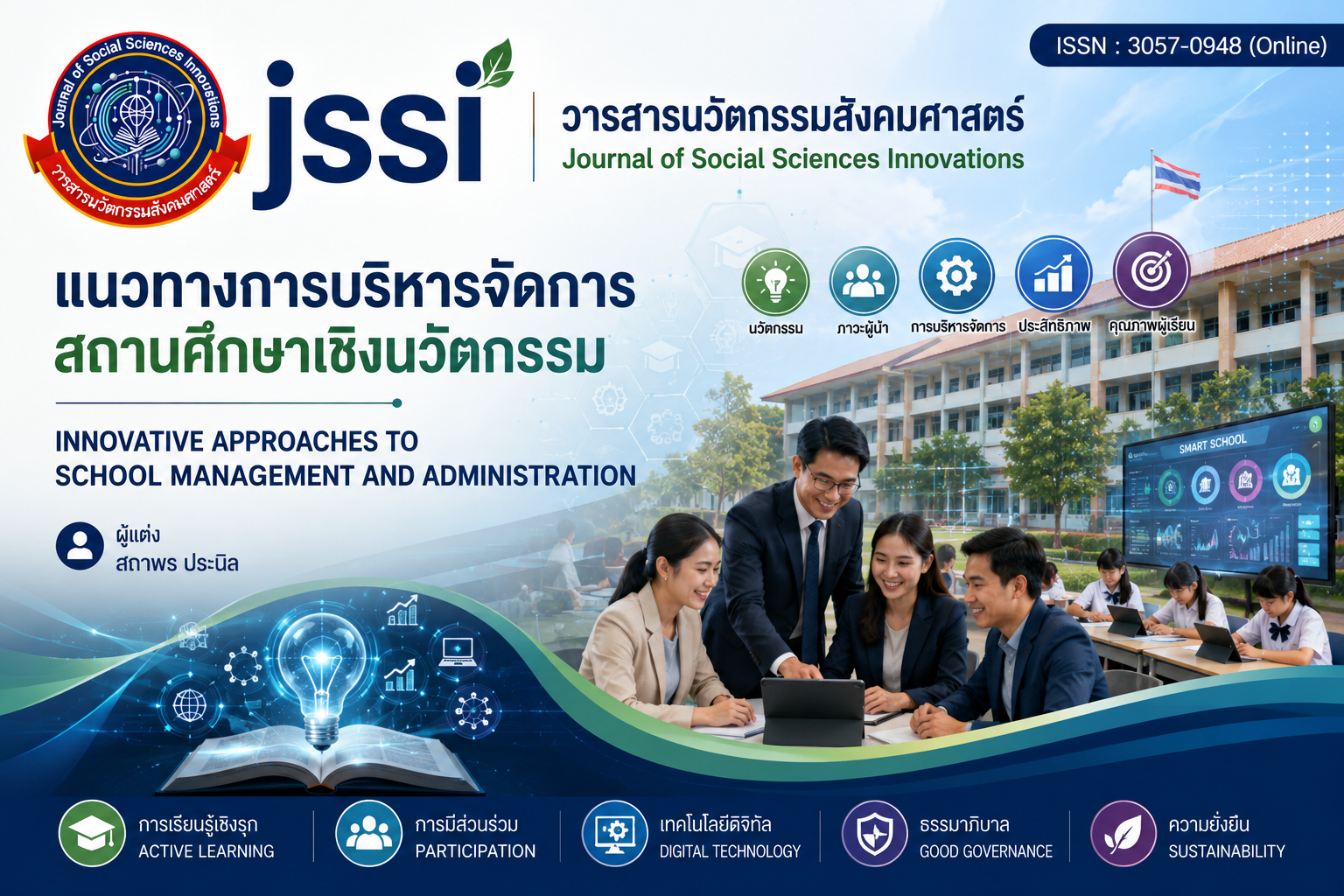
Innovative school management has become a crucial approach to improving educational quality in response to the rapid changes of society in the 21st century. Schools are increasingly confronted with challenges related to social transformation, technological advancement, educational policies, and rising expectations from stakeholders. This academic article aims to examine concepts, principles, and theories related to innovative school management and to propose practical approaches that can be applied to enhance school effectiveness in a systematic and sustainable manner. This study employs a documentary research method through the analysis and synthesis of academic literature, research findings, and educational policy documents. The results indicate that innovative school management should focus on multiple dimensions, including academic administration that promotes competency-based learning and active learning approaches; human resource management that emphasizes continuous professional development of teachers and educational personnel; creative and efficient management of budgets and resources; the integration of digital technologies and information systems to improve administrative efficiency; and the promotion of participation among teachers, parents, communities, and educational networks. Furthermore, school administrators play a vital role as innovative leaders who must possess vision, adaptability, and the ability to drive organizational change effectively. Innovative school management is not limited to the adoption of technology but involves a holistic transformation of management concepts, processes, and organizational culture aligned with the school context and societal changes. This article is expected to provide a useful academic framework for school administrators and educational stakeholders in applying innovative management practices to strengthen school capacity, enhance educational quality, and achieve sustainable development in education.
References
กระทรวงศึกษาธิการ. (2564). แนวทางการพัฒนาการบริหารสถานศึกษาในยุคดิจิทัล. กรุงเทพฯ: กระทรวงศึกษาธิการ.
สำนักงานคณะกรรมการการศึกษาขั้นพื้นฐาน. (2564). แนวทางการบริหารวิชาการสถานศึกษา ขั้นพื้นฐาน. กรุงเทพฯ: สพฐ.
สำนักงานเลขาธิการสภาการศึกษา. (2563). นวัตกรรมการบริหารการศึกษา. กรุงเทพฯ: พริก หวานกราฟฟิค.
สำนักวิชาการและมาตรฐานการศึกษา. (2562). การบริหารจัดการสถานศึกษาขั้นพื้นฐาน. กรุงเทพฯ: สพฐ.
สมชาย วงศ์คำจันทร์. (2564). การบริหารสถานศึกษาเชิงนวัตกรรมที่ส่งผลต่อคุณภาพผู้เรียน. วารสารบริหารการศึกษา, 15(2), 45–58.
สำนักงานพัฒนารัฐบาลดิจิทัล. (2563). การบริหารจัดการภาครัฐด้วยเทคโนโลยีดิจิทัล. กรุงเทพฯ: DGA.
Bush, T. (2011). Theories of educational leadership and management. (4th ed.). London: Sage.
David, F. R. (2011). Strategic management: Concepts and cases. (13th ed.). Upper Saddle River, NJ: Pearson.
Fullan, M. (2016). The new meaning of educational change. (5th ed.). New York: Teachers College Press.
Hoy, W. K., & Miskel, C. G. (2013). Educational administration: Theory, research, and practice. (9th ed.). New York: McGraw-Hill.
Kast, F. E., & Rosenzweig, J. E. (1972). General systems theory: Applications for organization and management. Academy of Management Journal, 15(4), 447–465.
Likert, R. (1967). The human organization: Its management and value. New York: McGraw-Hill.
OECD. (2019). Innovating education and educating for innovation. Paris: OECD Publishing.
Rogers, E. M. (2003). Diffusion of innovations (5th ed.). New York: Free Press.
Senge, P. M. (2006). The fifth discipline: The art and practice of the learning organization. New York: Doubleday.
Trilling, B., & Fadel, C. (2009). 21st century skills: Learning for life in our times. San Francisco: Jossey-Bass.